
Old Vines, Mountain Wines, and Spain’s Garnacha Revival
By Dr Neel Burton — Psychiatrist, philosopher, and wine writer; Fellow of Green Templeton College, University of Oxford; author of over twenty books.
In the Sierra de Gredos, west of Madrid, once-neglected old bush vines are yielding some of Spain’s most compelling wines: pale, elegant Garnacha and complex, characterful whites from Albillo Real. I have a bottle of the Garnacha open beside me as I write.
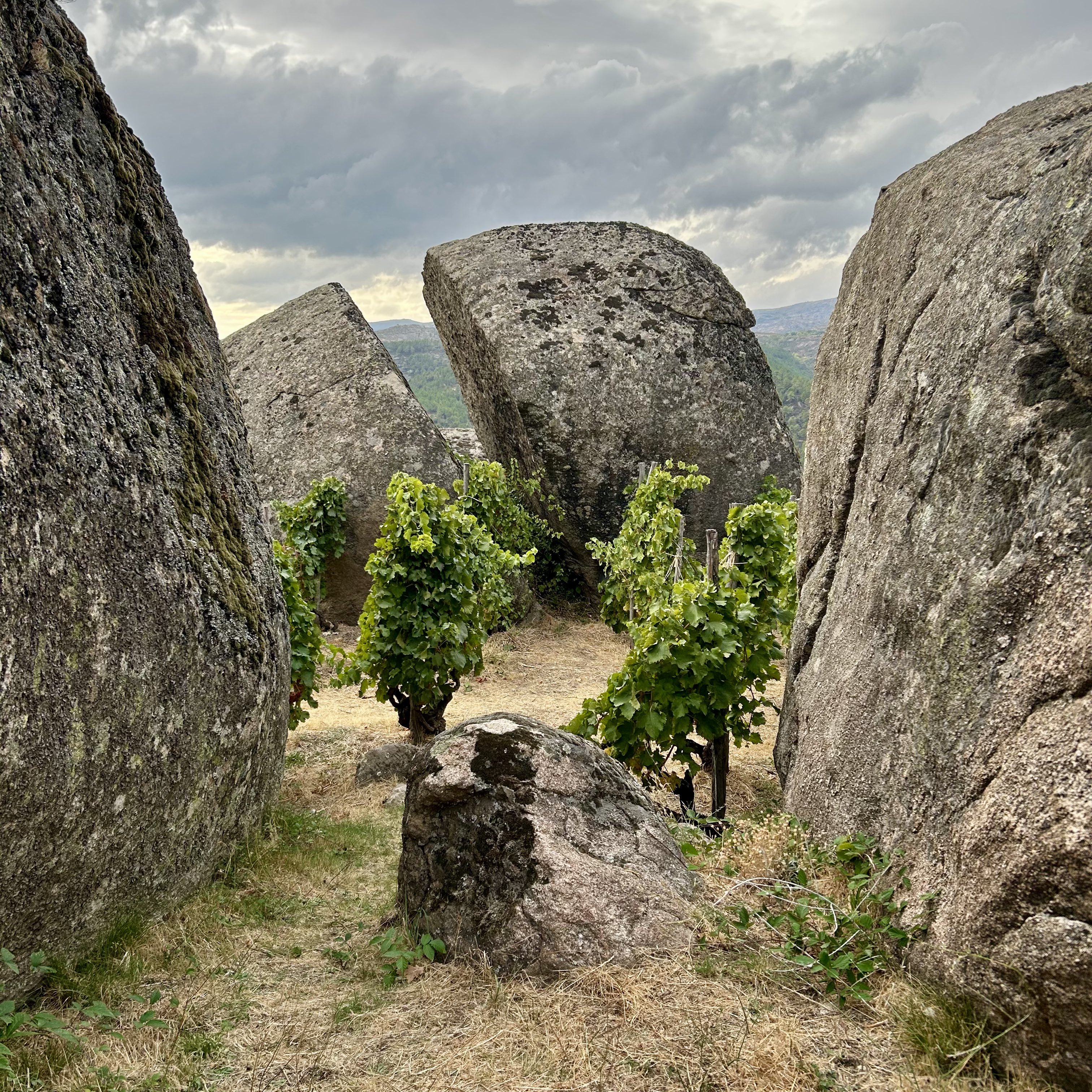
The vineyards lie across three main valleys: the Alberche in the centre, the Alto Alberche to the north, and the Tiétar to the south. Both the Alberche and the Tiétar flow into the Tagus. Enormous granite boulders punctuate the landscape; Comando G’s famous Rumbo al Norte looks more like a sculpture park than a vineyard, more like Easter Island than Spain. San Martín de Valdeiglesias, Cebreros, and El Tiemblo are about an hour away from Madrid. A further hour’s drive takes you into the Alto Alberche, close to the fortress city of Ávila.

Near El Tiemblo stand four pre-Roman granite bulls, the Bulls of Guisando. In Don Quixote, the rival Knight of the Mirrors boasts of having lifted them at his ladylove’s command. The region’s vineyards faced a less fanciful trial. The railway brought competing wines from Valdepeñas to Madrid, while Gredos’s steep, often terraced plots were costly to work and difficult to mechanise. Rural depopulation compounded the decline, leaving many vineyards abandoned. The modern revival gathered momentum with pioneers such as Telmo Rodríguez and Pablo Eguzkiza, who bought their first Gredos vineyard in 1999. Comando G, established in 2008, brought the region to international prominence.
Above the granitic bedrock, coarse sands derived from weathered granite range from a few centimetres to several metres in depth. There are also pockets of friable schist, notably around El Tiemblo. Whereas the granitic soils tend to yield fragrant, silky Garnacha, the schistous soils are associated with greater firmness and depth.
The combination of old bush vines, granite, and schist recalls another of my favourite wine regions: South Africa’s Swartland. In both places, a new generation of winegrowers recognised that vines valued chiefly for bulk production could yield wines of extraordinary distinction. If you already love Swartland, you will love Gredos.
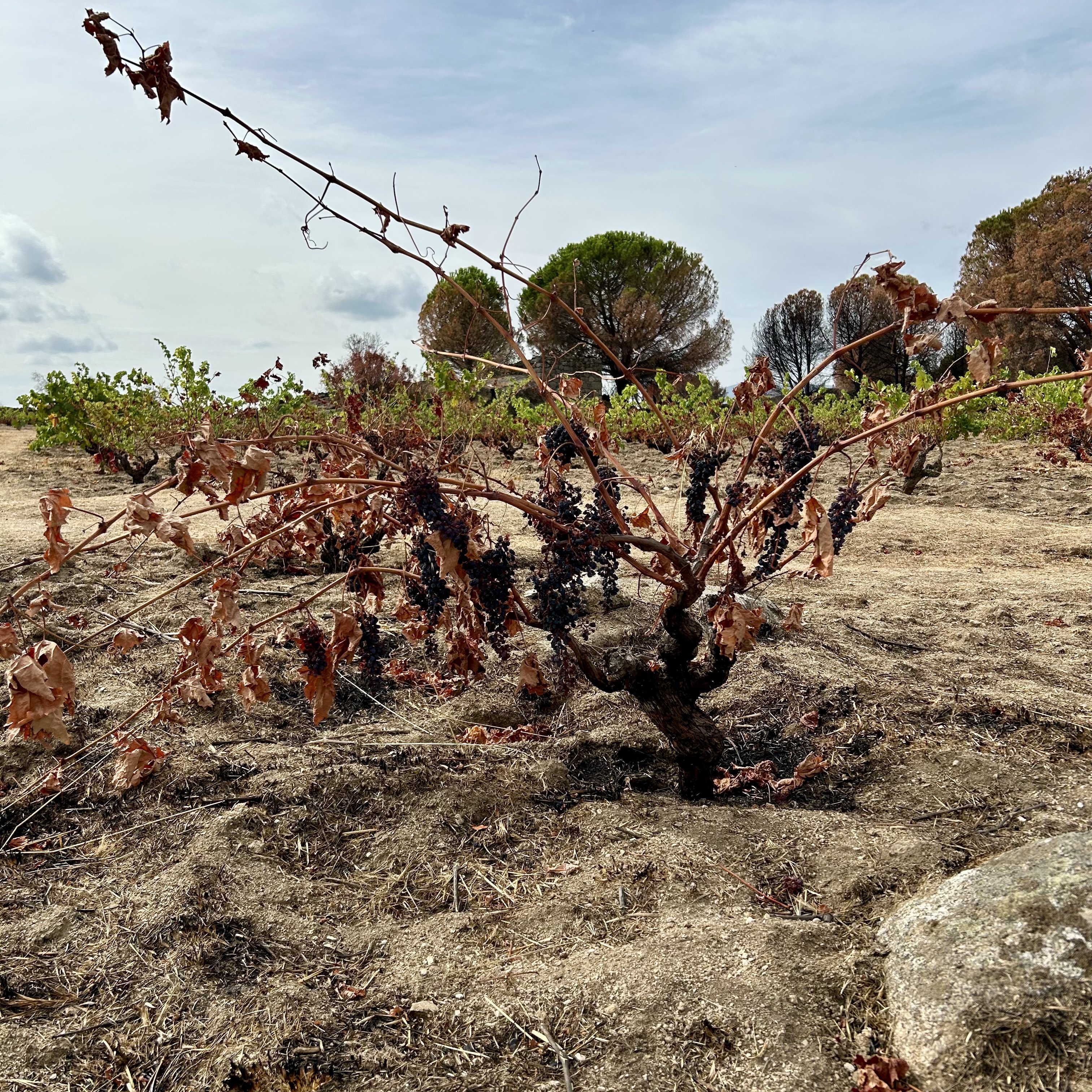
Gredos has hot, dry summers and cold, wetter winters, with snow at higher elevations. In 2026, Spain suffered the worst wildfires in its history. When I visited the region that September, several producers reported losing two or three hectares of vines—a considerable loss for estates with only a dozen or so hectares, and one made harder, and sadder, by the age of the vines.
In total, there are some 4,000ha of vines. Vineyards tend to be small and scattered, with many abandoned plots. Some lie above 1,000 metres, some even above 1,200, where high diurnal temperature variation helps preserve freshness and develop aromatic complexity. Yields are low, often below 30hl/ha. The dry summers and strong winds favour organic viticulture. As one winemaker told me, “It’s hard to make bad wine here.”
Despite its reputation, Gredos has no eponymous appellation—in part because the wine region straddles the provinces of Madrid, Toledo, and Ávila, each in a different autonomous community. Wines carrying a geographical designation appear under Cebreros, Méntrida, or Vinos de Madrid, or the broader Vino de la Tierra de Castilla y León. Still, qualifying wines within Cebreros may carry ‘Sierra de Gredos’ on the label.
Grenache Noir (Garnacha Tinta) accounts for some four-fifths of plantings. I found two broad styles: pale, ethereal wines driven by acidity, and the soupier kind of Grenache best left to others. The finest examples can recall the best of Burgundy, with their superfine tannins and notes of rosehip, lavender, violets, incense, thyme, and fennel—often reflecting the aromatic plants growing among the vines.
Albillo Real—not to be confused with Albillo Mayor—was once sold as a delectable table grape, but in Gredos yields some of Spain’s most serious and intriguing white wines. Its low, sprawling bush vines ripen early, and growers prize its affinity for warmth and sunshine, whereas Grenache often benefits from cooler, north-facing slopes. The examples I tasted were complex and full-bodied, with notes of honeycomb, jasmine, citrus pith, and herbs, and a saline finish. Yet in 2025, only around 50 hectares of Albillo Real were registered within the Cebreros appellation.

My favourite producers in Gredos include 4 Monos, Bernabeleva, Comando G, Daniel Ramos, Las Moradas, and Sotomanrique. Daniel Ramos makes his wines as naturally as possible and releases them over several years. At Las Moradas, Isabel Galindo has been making wine since 2003 and has perfected her art. My favourites at 4 Monos and Bernabeleva were the single-vineyard Molino Quemado and Arroyo del Tórtolas respectively. Sotomanrique in particular struck me as very good value for money.
If you ever visit beautiful Gredos, the tiny Hotel Labranza in San Martín is a traditional casa de labranza (farmhouse) built in 1710—with such a soundscape, and such breezes, that I struggled to get out of bed in the mornings.
Continue Exploring
Neel Burton is author of The Concise Guide to Wine and Blind Tasting, a guide to understanding wine through its landscapes, history, culture, and character.
You may also enjoy


You must be logged in to post a comment.