If you’re struggling with depression, or know someone who is, I’d like you to have this book—free of charge.
What if depression were a blessing as well as a curse? This is a book about how depression can have benefits as well as costs, and how to reap those benefits while making yourself feel better—better, in fact, than ever before.
Drawing on psychiatry, psychology, philosophy, and literature, Dr Neel Burton explores depression not only as an illness to be treated, but also as an opportunity for insight, growth, and transformation.
🏆Semi-finalist, the BookLife Prize
🏆Highly Commended, the BMA Book Awards
A comprehensive, sympathetic, and thought-provoking guide for those who want to explore their depression in more depth.—The British Journal of Psychiatry
Neel is an incredibly insightful and elegant writer, with a deep knowledge of all he surveys.—Dr James Davies, psychotherapist, author of Cracked
I have read most of Dr. Neel Burton’s books and have enjoyed them immensely … All in all, I found this to be a very insightful and engaging book on depression.—Jamie Bee, Amazon.com Top 50 Reviewer
Three ancient mind exercises for processing and subliming bad news.
Imagine: Your house has been burgled. You’ve been fired. Your partner cheated or walked out on you. You’ve been diagnosed with a life-changing condition…
Bad news can leave us in a state of dread and despair. It seems like our whole world is falling apart, almost as if we’re being driven into the ground. We fear the very worst and cannot get it out of our mind, or gut. Often, there are other emotions mangled in, like anger, guilt, despair, betrayal, and love.
Bad news: we’ve all had it, and the worst is yet to come.
So, how best to cope?
I’m going to give you three cognitive strategies, or mind exercises, that I picked up from the Stoic philosophers—who, in the second century, could count the Roman Emperor, Marcus Aurelius, among their followers.
All three strategies aim, in one way or another, at generating perspective. While reading, hold a recent piece of bad news in the front of your mind, and consider how the strategies might or might not apply to your bad news.
Contextualization
Try to frame the bad news, to put it into its proper context. Think about all the good things in your life, including those that have been and those that are yet to come. Remind yourself of all the strengths and resources—the friends, facilities, and faculties—that you can draw upon in your time of need. Imagine how things could be much, much worse—and how for some people they actually are. Your house may have been burgled. Yes, you lost some valuables and it’s all such a huge hassle. But you still have your health, your job, your partner… Bad things are bound to hit us now and then, and it can only be a matter of time before they hit us again. In many cases, they are just the flip side of the good things that we enjoy. You got burgled, because you had a house and valuables. You lost a great relationship, because you had one in the first place. In that much, many a bad thing is no more than the removal or reversal of a good one.
Negative visualization
Now focus on the bad news itself. What’s the worst that could happen, and is that really all that bad? Now that you’ve got the worst out of the way, what’s the best possible outcome? And what’s the most likely outcome? Imagine that someone is threatening to sue you. The worst possible outcome is that you lose the case and suffer all the entailing cost, stress, and emotional and reputational hurt. Though it’s unlikely, you might even do time in prison (it has happened to some, and a few, like Bertrand Russell, did rather well out of it). But the most likely outcome is that you reach some sort of out-of-court settlement. And the best possible outcome is that you win the case, or better still, it gets dropped.
Transformation
Finally, try to transform your bad news into something positive, or into something that has positive aspects. Your bad news may represent a learning or strengthening experience, or act as a wake-up call, or force you to reassess your priorities. At the very least, it offers a window into the human condition and an opportunity to exercise dignity and self-control. Maybe you lost your job: time for a holiday and a promotion, or a career change, or the freedom and fulfilment of self-employment. Maybe your partner cheated on you. Even so, you feel sure that he or she still loves you, that there is still something there. Perhaps you can even bring yourself to look at it from his or her perspective. Yes, of course it’s painful, but it may also be an opportunity to forgive, to build a closer intimacy, to re-launch your relationship—or to go out and find a more fulfilling one. You’ve been diagnosed with a serious medical condition. Though it’s terrible news, it’s also the chance to get the support and treatment that you need, to take control, to fight back, to look at life and your relationships from another, richer perspective.
A Taoist story for the road
There’s a Taoist story about an old farmer whose only horse ran away. “Such terrible news!” said a neighbour. “Maybe it is, maybe it isn’t,” replied the farmer. The next day, the horse returned with six wild horses. “Such wonderful news!” exclaimed the neighbour. “Maybe it is, maybe it isn’t,” replied the farmer. The day after that, the farmer’s son tried to tame one of the wild horses but got thrown off and broke a leg. “Such terrible news!” cried the neighbour. “Maybe it is, maybe it isn’t,” replied the farmer, biting into a peach. A week later, war broke out: thanks to his broken leg, the farmer’s son managed to escape military conscription. “It all worked out really well in the end,” said the neighbour, “such great luck!”
“Maybe it is, maybe it isn’t,” replied the farmer, rolling his eyes.
Neel Burton is author of Growing from Depression, which is currently free to download from his website bookstore.
Dr James Davis is a medical anthropologist and trained psychotherapist who is perhaps best known for his book of 2013: Cracked: Why Psychiatry Is Doing More Harm Than Good.
Cracked is a forensic examination of our increasing reliance on psychiatry and psychiatric drugs, in which Davis essentially argues that psychiatry ‘in the name of helping others, has actually been helping itself’.
His latest book, Sedated (March 2021), is broader in scope, looking at the social and political underpinnings that facilitated and enabled this state of affairs.
Since the early 1970s, the number of mental disorders listed in the DSM, the American classification of mental disorders, has risen from 106 to 370. Antidepressant prescribing in the U.K. surged from 25 million prescriptions per year in 2002 to nearly 75 million in 2020. The coronavirus pandemic has only accelerated the trend—while more benign and empowering psychological treatments are ever harder to access.
In Sedated, Davis puts it to us that psychiatric interventions, including superficial psychological interventions principally aimed at returning people to productivity, merely create the illusion of care while leaving the structural causes of distress intact. More than that, by shifting the blame or responsibility onto the sufferer, they serve to obscure these structural causes and, thereby, to preserve and entrench the neoliberal status quo.
The interventions favoured by the government, including even the psychological interventions, are those that involve internal rather than external change, because internal change promises to increase economic productivity and so cost-effectiveness, which is the preferred criterion for endorsing one treatment over another. If we are suffering, we are simply to stiffen ourselves to the social problems created by successive policies aimed solely at the bottom line.
Karl Marx famously said that ‘religion is the opium of the people’. The social institutions responsible for understanding and managing suffering are critical to the preservation of vested interests. With the waning of religion in the West, priests may have been supplanted by psychiatrists. The idea that a pill can make us happy ought to be inherently suspicious but fits perfectly with our materialistic and mechanistic worldview.
Thus, according to the prevailing narrative, suffering is rooted in individual rather than social or existential causes, while well-being is whatever best serves the economic imperative. Behaviours that disrupt economic activity are labelled as mental disorder, and this mental disorder presents yet another money-making opportunity.
If so many of us are ill, if a quarter of us are taking a psychiatric drug, this is because our suffering, having been stripped of its deeper purpose and meaning, is no longer being heeded. It is no longer being interpreted as a vital call to change, or to protest against harmful or inhibiting conditions.
On the contrary, once we identify as mentally ill, we become disempowered in the belief that the problem lies solely with us, or, more precisely, with misfiring chemicals in our brains. While we are at the clinic, we are not at the barricades.
And while we work to grow the economy, we are not working to grow ourselves.
This is very big picture stuff from James Davies, who weaves our worst fears into a coherent, compelling, and damning narrative.
By Dr Neel Burton — Psychiatrist, philosopher, and wine writer; Fellow of Green Templeton College, University of Oxford; author of over twenty books.
Essay lightly revised on 21 August 2026.
Why do we garden? We spend extraordinary amounts of time and effort digging, planting, pruning, watering, and weeding, only to have to do it all over again. Yet gardens have been with us since the beginnings of civilisation, serving not merely as sources of food but as expressions of power, religion, philosophy, and our relationship with nature.
Ineni, architect to Pharaoh Thutmose I (d. 1492 BCE), had his garden painted into his tomb, along with a list of all the trees within it—presumably, so that they might be accounted for in the afterlife.
Ineni’s garden included:
170 date palms
120 doum palms
73 sycamore figs
31 persea
16 carob
12 grapevines
10 tamarisks
8 willows
5 figs
5 pomegranates
5 garland thorns
2 moringas
2 myrtles…
A grand garden of this sort symbolised control and mastery over nature, a haven of peace and plenty, of order and beauty, by which to project the status, power, and temperament of its owner. Other, more famous, examples include the Hanging Gardens of Babylon, the Gardens of the Real Alcázar in Seville, and the Gardens of Versailles.
The garden could also have a religious or philosophical message or dimension. For example, the Old Testament’s four rivers of Eden are represented by four watercourses in Islamic paradise gardens, and four paths in Christian cloister gardens. The Zen garden, by hinting at hidden principles, serves as an aid to meditation about the true meaning of existence.
The Gardens at Versailles reflect a rationalist, Cartesian vision of God-given ideas and principles for the intellect to apprehend, whereas English landscape gardens are more in the empiricist mould, presenting nature as a stream of sensory experiences skirting across the blank slate of the mind.
In either case, the garden represents a taming of nature, from dark and deadly forest, or disease-infested swamp, to an extension of our living space: open and structured to still our minds, but retaining enough mystery to sustain our interest and even, perhaps, capture our imagination.
Trees as Symbols
Individual plants too can have a meaning. English churchyards often feature yew trees, which are poisonous, dark, and evergreen, and symbolise both death and immortality. A yew tree is commonly found near the lychgate, where, prior to the advent of mortuaries, the dead awaited burial while mourners kept vigil.
In the ancient world, the palm tree symbolised victory, peace, and bounty, while the cedar of Lebanon symbolised pride, majesty, and dignity. Both also stood for righteousness, as in Psalm 92:12: ‘the righteous shall flourish like the palm tree, grow tall like the cedar of Lebanon.’ Today, Cedrus libani is the national emblem of Lebanon, and a symbol of the peaceful Cedar Revolution of 2005.
Trees can also be planted to mark an important occasion, which is why British royals are often asked to brandish a shovel. In an annual tradition, the Friends of my local park purchase a noteworthy tree and invite a dignitary such as the Lord Mayor to plant it.
A New Religion?
Today, gardens and gardening are more popular than ever. Millions of people in the UK garden, whether in a garden, on an allotment, or simply on a balcony.
The BBC’s flagship Gardeners’ World, presented by Monty Don, attracts millions of viewers—which, in the UK, is many more people than go to church.
Community garden projects and ‘guerrilla gardening’ are on the rise, as are garden towns and villages. A few years ago, one of my neighbours organised for thousands of daffodils to be planted on a neglected and overlooked common, transforming it into a Wordsworthian idyll for the selfie generation. I wonder, do they know that ‘daffodil’ is Narcissus in Latin?
Monty Don sharing this article on Twitter. Narcisse, moi?
Good for Mind and Body
Gardening is more and more recognised, and even prescribed, for its health benefits. These include increased muscle strength and cardiovascular fitness; improved sleep and diet (if you grow your own produce); reduced stress, anxiety, and depression; a greater sense of community and belonging; and better self-esteem.
You don’t even have to get your hands dirty: some of these benefits accrue simply from visiting a garden, or even just looking over one—although it probably helps to notice and mentally engage with the greenery.
Researchers in Korea randomly assigned hospital patients recovering from thyroidectomy to rooms with plants and flowers, and rooms without, and found that the test group fared significantly better, asking for less pain relief and requiring less time in hospital. So yes, it makes sense to bring flowers, and, at home, to have indoor plants.
Even street trees greatly benefit our health. An American study looking at the city of Toronto found that, for cardio-metabolic conditions (heart disease, stroke, diabetes, obesity…), an increase of just 11 trees per city block had a comparable effect to an increase in annual personal income of USD 20,000.
How might gardening help with mental health? To various degrees, we live inside the stories we tell ourselves. But gardening drags us out of our tortured heads and back into the natural world, which blunts the ideological and emotional extremes to which detached, abstract thought is prone.
In 1920, a mentally strained Ludwig Wittgenstein took up the post of assistant gardener at Klosterneuburg Abbey, explaining in a letter to a friend that he had been longing for ‘some kind of regularized work which, of all the things I can do in my present condition, is the most nearly bearable…’
Voltaire’s Candide (1759) is an attack on the highly abstracted, convoluted, and strained philosophy of Gottfried Leibniz (whom I nevertheless love), and famously concludes with the phrase ‘we must cultivate our garden.’
The Gardening of the Soul
In the Philosophy of Existence (1938), Karl Jaspers describes this disinterested process of looking outside oneself—or phenomenology, as it is sometimes called—as ‘a thinking that, in knowing, reminds me, awakens me, brings me to myself, transforms me.’
Just picture the gardener’s pure and simple delight at the first crocuses or tulips, a bird’s nest, a swarm of bees…
If gardening makes us feel better, it also makes us into better people. It is a moral education, a school of life, instilling virtues such as pragmatism, patience, perseverance, reliability, and humility, which then transfer out into other spheres.
In his treatise on agriculture (c. 160 BCE), Cato is quite clear that farmers make the bravest and strongest soldiers, and that, of all men, they are ‘the most highly respected, most stable, and least hated (minime invidiosus).’
In Plato’s Phaedrus (c. 370 BCE), Socrates compares the wise man to the good husbandman, who is careful to scatter the right seed in the right soil in the right season. Similarly, the good teacher is careful to sow the right words in the right soul at the right time. For Plato, the Divine Teacher, teaching is the gardening of the soul.
Building on these notions, Epicurus (d. 270 BCE) founded his philosophical school in a garden just outside Athens. The Garden sought to return to an agricultural golden age of harmony, community, and self-sufficiency—to ground a flourishing life in the midst of a flourishing garden.
Life in the Garden was not as you might imagine. Epicurus was content with bread and water and famously asked a friend to send him a little cheese so that, when he wished, he might feast. Far more important than luxury was friendship. ‘Of all the things which wisdom provides for the happiness of the whole life,’ he wrote, ‘by far the most important is friendship.’
Time Made Visible
A garden is a microcosm of the outside world. Gardeners are acutely aware of the rhythms and cycles of nature: which flowers are in their prime, when to plant out the seedlings, when and how and how much it last rained. Just as music is time made audible, so the garden is ‘time made visible’ (Clive James).
Winter is difficult, yes because it is dark and cold, but also because time is no longer structured by a succession of flowerings and fruitings. Time becomes amorphous, to be entertained and endured rather than savoured and celebrated like the season of magnolias, cherry blossom, rhubarb, plums, or chestnuts.
More than just keen observers of time, gardeners are real-life Time Lords, able to speed up time by working in the garden, and, later, to slow it right down by sitting back and surveying the fruits and flowers of their labour. Some gardeners are even able to step out of time altogether, working year-round to create Arcadian moments of perfection.
But moments are all they will ever be. When you paint a picture or write a book, it is there for ever (and isn’t that just amazing?), but when you mow the lawn you have to do it all over again in just a few days’ time. The gardener is like Sisyphus, the mythological king made to repeat for all eternity the same meaningless task of pushing a boulder up a mountain, only to see it roll back down again.
In his essay of 1942, The Myth of Sisyphus, Albert Camus concludes: ‘The struggle to the top is itself enough to fill a man’s heart. One must imagine Sisyphus happy.’
Even in a state of utter hopelessness, Sisyphus can still be happy. Indeed, he is happy precisely because he is in a state of utter hopelessness, because in recognising and accepting the hopelessness of his condition, he at the same time transcends it.
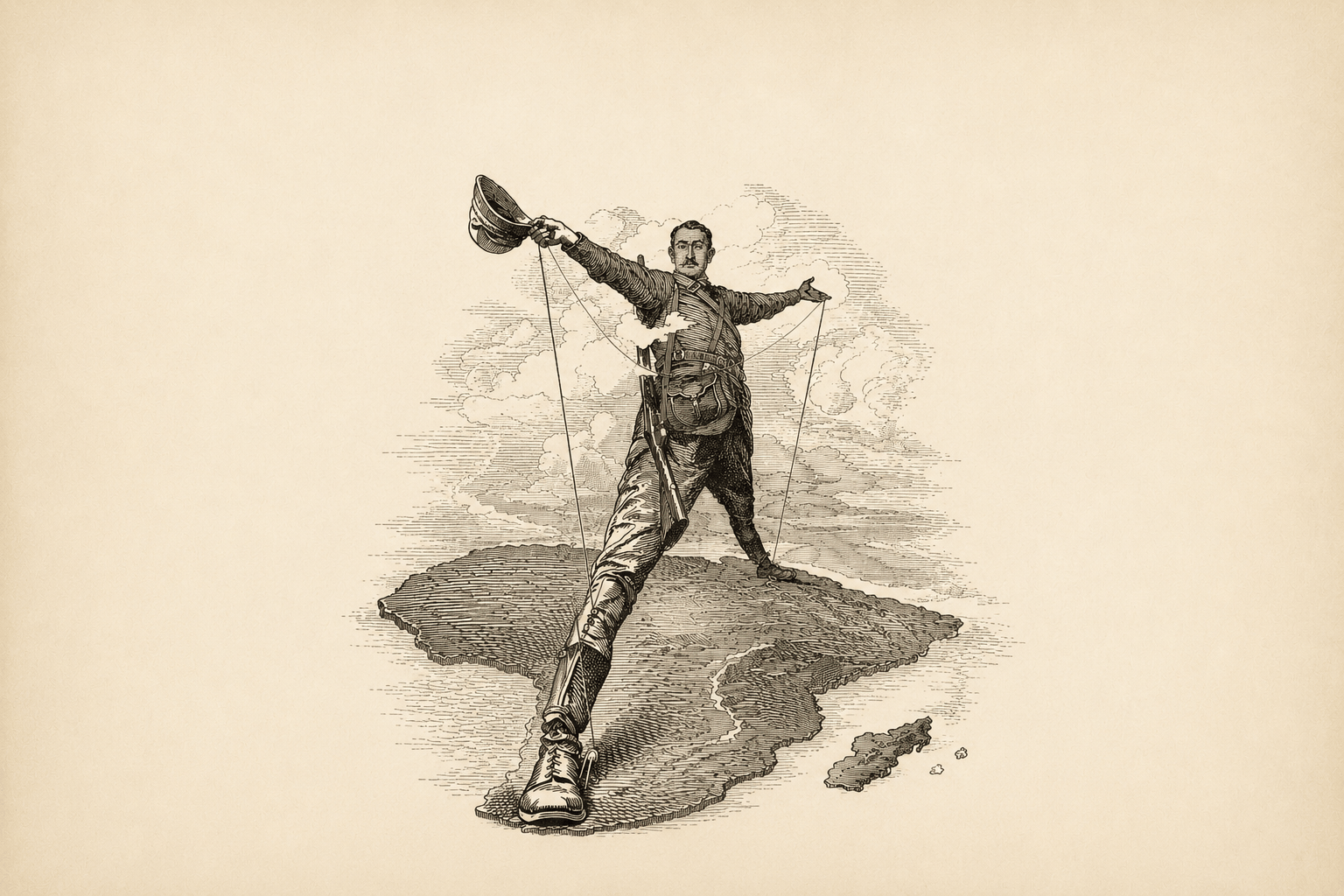
Cecil Rhodes straddling Africa. No commercial interests there.
By Dr Neel Burton — Psychiatrist, philosopher, and wine writer; Fellow of Green Templeton College, University of Oxford; author of over twenty books.
Essay substantially revised on 28 August 2026.
After the Indian Ocean tsunami of 2004, Western trauma specialists descended upon Sri Lanka expecting an epidemic of post-traumatic stress disorder (PTSD). They barely found any. The suffering, though very real, took other forms.
Until fairly recently, depression was mostly unknown to the lay population of Japan. But between 1999 and 2008, diagnoses of depression more than doubled as psychiatrists and pharmaceutical companies urged people to reinterpret their distress in terms of the disorder.
When I was growing up in Switzerland, virtually in the shadow of the World Health Organisation headquarters, I did not know anyone with ADHD, an eating disorder, or a problem with self-harm. Maybe my parents and teachers sheltered me from these things. But I watched a fair amount of television, and no one seemed to talk about them there either. So either I was living in the Truman Show, or they were much less prevalent.
Have these constructs always been there, waiting to be recognised? Then how come Aristotle, who studied everything and wrote a mountain of books, never described them? Or Hippocrates, for that matter. Or do the forms of our distress change with our interpretations of them?
Culture-Bound Syndromes and What They Reveal
Culture-bound syndromes are mental disturbances that only find expression in certain cultures or ethnic groups. There are a great many of them. For instance, dhat, seen in South Asian men, involves sudden fear about loss of semen in the urine, whitish discolouration of the urine, and sexual dysfunction, accompanied by feelings of weakness and exhaustion. Dhat may be rooted in the old Ayurvedic conception of semen as the most refined and precious of the bodily substances, reflected in the Eastern belief that it takes forty drops of blood to create a drop of bone marrow, and forty drops of bone marrow to create a drop of semen, and therefore that semen is a concentrated essence of life.
Culture-bound syndromes do not sit all too comfortably in Western classifications of mental disorder. DSM-IV simply defined them as ‘recurrent, locality-specific patterns of aberrant behavior and troubling experience…’ and listed a small number of paradigmatic forms such as dhat, koro, and susto.
DSM-5, published in 2013, replaces the notion of culture-bound syndromes with three ‘cultural concepts of distress’: cultural syndromes, cultural idioms of distress, and cultural explanations for distress. Rather than merely listing specific cultural syndromes, DSM-5 adopts a broader approach to cultural issues and acknowledges that all mental disorders, including DSM disorders, can be culturally shaped.
This is an important admission. The old concept of a culture-bound syndrome assumed that other people’s disorders were culturally shaped, whereas the West’s were an objective reflection of human biology. A man in Lahore who feared losing his vital essence in his semen was culture-bound; a man in London who understood his unhappiness as a chemical imbalance in his brain was science.
Science on Export
However, some DSM disorders are, it seems, much more culturally shaped than others. Thus, PTSD, ADHD, anorexia nervosa, bulimia nervosa, depression, and deliberate self-harm among others can all be understood as cultural syndromes—not natural kinds awaiting discovery, like Aristotle’s species, but shifting expressions of human distress. Yet, for being in the DSM, they are usually seen, and largely legitimised, as biological and therefore universal expressions of human suffering.
This matters because Western psychiatry does not stay in the West—which would be bad enough. Arm in arm with pharmaceutical companies, classifications such as DSM and ICD encourage the wholesale exportation not only of Western mental disorders, but also of Western accounts and approaches to mental disorder—and, ultimately, of Western values or tropes such as biologism, individualism, and the medicalisation of distress and deviance.
Japan, with which we began, offers a striking example. The anthropologist Junko Kitanaka has documented how depression went from being a relatively obscure condition to one of the most talked-about illnesses in recent Japanese history. The important question is not simply whether the Japanese became more depressed, but what happened when depression became available as a culturally sanctioned way of understanding distress.
Perhaps the suffering had always been there, but lacked the language—or permission—to express itself in the form of depression. But there is another possibility: that, by supplying a new language and template for distress, psychiatry did not merely reveal an existing epidemic but helped to shape one—and then sell the cure. Japan, coincidentally, happened to be rich.
A diagnosis, on this account, does not merely name something that already exists. Once established in a culture, it can influence which aspects of distress are noticed, how they are interpreted and expressed, and what is done about them. It becomes available not merely to psychiatrists but also to the people who suffer, who may be eager for an explanation of their suffering—and for a solution.
What It’s Costing Us
In Crazy Like Us: The Globalization of the American Psyche, the journalist Ethan Watters shows how psychiatric imperialism is leading to a pandemic of Western disease categories and treatments. Watters argues that changing a culture’s ideas about mental disorder actually changes that culture’s mental disorders, depleting the store of local beliefs and customs which, in many cases, provided better answers to people’s problems than antidepressants and antipsychotics. For Watters, ‘the most devastating consequence of the spread of American culture has not been our golden arches or bomb craters but our bulldozing of the human psyche itself.’
He writes:
Looking at ourselves through the eyes of those living in places where human tragedy is still embedded in complex religious and cultural narratives, we get a glimpse of our modern selves as a deeply insecure and fearful people. We are investing our great wealth in researching and treating this disorder because we have rather suddenly lost other belief systems that once gave meaning and context to our suffering.
To me, Watters seems to be describing a vicious cycle: biologism can take hold because the psyche has become impoverished, and biologism in turn further impoverishes it. The more we medicalise our suffering, the less meaning it can have; and the less meaning it has, the more we need to medicalise it. We’re receiving the signal, but attending to the sound rather than to the message.
Templates of Distress
Distressed people tend to externalise their suffering, partly to make it more manageable, and partly so that it can be recognised and legitimised. According to the medical historian Edward Shorter, our culture’s beliefs and narratives about illness provide us with a limited number of templates or models of illness by which to externalise our distress. If authorities such as psychiatrists and celebrities appear to endorse or condone a new template such as ADHD or deliberate self-harm, the template enters into our culture’s ‘symptom pool’ and the condition starts to spread. Meanwhile, tired templates seep out of the symptom pool, which may explain why conditions such as hysteria, fugue, and catatonic schizophrenia, which were once common, have become so rare.
The number of cases of bulimia nervosa rose in 1992, the year in which the journalist Andrew Morton exposed Princess Diana’s ‘secret disease’, and peaked in 1995 after Diana went public with her eating disorder. It began to decline in 1997, the year of her tragic death. This synchronology suggests that Diana’s iconic status combined with intense press coverage of her bulimia—and bulimia in general—led to an increase in the incidence of the disorder. Something similar happened in South Korea in 2010-12, when diagnoses of panic disorder shot up after several celebrities disclosed that they suffered from the condition.
Of course, Diana may simply have encouraged people who were already suffering from bulimia to recognise it and come forward. But Shorter’s more unsettling possibility is that, by making a particular template of distress culturally available, she also made it more likely that distressed people would stumble into it.
This does not mean that people consciously choose their symptoms, still less that they are pretending. Culture operates at a much deeper level than that. Just as we do not choose the language in which we dream—or even the contents of our dreams—so we do not choose the language in which we suffer.
And this brings us back to the central paradox of psychiatric imperialism. By exporting Western psychiatric templates, we may be creating the very universality that we claim merely to have discovered. And there are strong commercial drivers for doing so: universal disorders create universal markets. In exporting the diagnosis, we help to create the disease—or, on a global scale, an invisible pandemic.
The danger for us psychiatrists and health professionals when treating people with mental disorder is to treat the template without addressing or even acknowledging the very real distress that lies beneath—to hand out the tablets without asking what the suffering is about, and how it might actually be alleviated.




You must be logged in to post a comment.