Whatever is done for love always occurs beyond good and evil. – Nietzsche
Splitting is a very common ego defense mechanism; it can be defined as the division or polarization of beliefs, actions, objects, or persons into good and bad by focusing selectively on their positive or negative attributes. This is often seen in politics, for example, when members of the Labour Party portray members of the Conservative Party as narrow-minded and self-interested, and conversely when members of the Conservative Party caricature members of the Labour Party as self-righteous hypocrites. Other examples of splitting are the deeply religious person who thinks of others as being either blessed or damned, the child of divorced parents who idolises one parent and shuns the other, and the hospital in-patient who sees the doctors as helpful and dedicated and the nurses as lazy and incompetent. An example of splitting in literature can be found in JD Salinger’s Catcher in the Rye. The main protagonist, Holden Caulfield, is mystified by adulthood. To help cope with his fear of becoming an adult, he thinks of adulthood as a world of entirely bad things such as superficiality and hypocrisy (‘phoniness’) and of childhood as a world of entirely good things such as innocence, curiosity, and honesty. He tells his younger sister Phoebe that he imagines childhood as an idyllic field of rye in which children romp and play, and himself as the ‘catcher in the rye’ who stands on the edge of a cliff, catching the children as they threaten to fall over (and presumably die/become adults).
Anyway, I keep picturing all these little kids playing some game in this big field of rye and all. Thousands of little kids, and nobody’s around – nobody big, I mean – except me. And I’m standing on the edge of some crazy cliff. What I have to do, I have to catch everybody if they start to go over the cliff – I mean if they’re running and they don’t look where they’re going I have to come out from somewhere and catch them. That’s all I’d do all day. I’d just be the catcher in the rye and all. I know it’s crazy, but that’s the only thing I’d really like to be.
In contrast to JD Salinger, Miguel de Cervantes uses splitting to great comical effect as his main protagonist, the self-styled Don Quixote de la Mancha, guides us through a world that he has repopulated with heroes and villains, princesses and harlots, giants and dwarves – with the heroes being the greatest, the villains the most cruel, the ladies the fairest and most virtuous, and so on. ‘Take care, your worship,’ cries Sancho Pancha, Don Quixote’s peasant-turned-squire, ‘those things over there are not giants but windmills.’ Splitting diffuses the anxiety that arises from our inability to grasp the nuances and complexities of a given situation or state of affairs by simplifying and schematising the situation and thereby making it easier to think about; it also reinforces our sense of self as good and virtuous by effectively demonizing all those who do not share in our opinions and values. On the other hand, such a compartmentalization of opposites leaves us with a distinctly distorted picture of reality and a restricted range of thoughts and emotions; it also affects our ability to attract and maintain relationships, not only because it is tedious and unbecoming, but also because it can easily flip, with friends and lovers being thought of as personified virtue at one time and then as personified vice at another (and back and forth). Splitting also arises in groups, when members of the in-group are seen to have mostly positive attributes, whereas members of out-groups are seen to have mostly negative attributes – a phenomenon that contributes to groupthink. Finally, it is worth noting that both fairy tales and the Church feature a number of sharp splits, for example, heroes and villains, good and evil, heaven and hell, angels and demons, and saints and sinners; and that the greatest characters of literature, such as the Achilles or the Odysseus of Homer and the Anthony or the Cleopatra of Shakespeare, contain large measures of both good and bad, with the one being intimately related to the other.
Inauthenticity involves pretending to be something other than one is and so, by implication, casting off the freedom to create, express, and fulfil one’s own self. Inauthenticity is often reinforced by sociocultural forces such as peer pressure and advertising, and is motivated by the subconscious desires to fit in, avoid criticism, and minimise or put off the existential anxiety associated with choice and responsibility. Examples include the teenager who acts ‘cool’, the person who takes an interest in something because others do, and the person who gets married because he has arrived at the ripe old age of 30, 35, or 40 years old.
The 20th century philosopher Jean-Paul Sartre calls such inauthenticity mauvaise foie, ‘bad faith’. His paradigmatic example of bad faith is that of a waiter who does his utmost to conform to the archetype of the waiter, that is, to everything that a waiter should or is expected to be. For Sartre, the waiter’s exaggerated behaviour is evidence that he is play-acting at being a waiter, an automaton whose essence is to be a waiter. By sticking with the safe, easy, default ‘choice’ and failing to entertain or even recognise the multitude of other choices that are open to him, the waiter places himself at the mercy of his external circumstances. In this important respect, he is more akin to an object – ‘a waiter’ – than to a conscious human being who is able to transcend his existence to give shape to his essence. As Freud himself commented in his book, Civilization and its Discontents, ‘Most people do not really want freedom, because freedom involves responsibility, and most people are frightened of responsibility.’
The concept of authenticity does not begin with Sartre or Freud, and stretches at least as far back as Plato. In the Greater Alcibiades, Socrates asks a young and foolish Alcibiades how one is to go about gaining self-knowledge. Socrates maintains that, if one were to say to the eye, ‘See yourself,’ the eye should look into a mirror to see itself. Since the pupil of the eye is just like a mirror, the eye could see itself by looking into an eye. Similarly, the soul can see itself by looking into the soul, and particularly into that part of the soul which has most to do with wisdom and which is therefore most akin to the divine. Self-knowledge, Socrates concludes, is, in fact, no other than wisdom; unless Alcibiades finds wisdom, he will never be able to know his own good and evil, nor that of others, nor the affairs of states. If Alcibiades were to become a statesman – as indeed he intends – without first having found wisdom, he would fall into error and be miserable, and make everybody else miserable too. What is more, he who is not wise cannot be happy, and it is better for such a person to be commanded by a superior in wisdom; since that which is better is also more becoming, slavery is more becoming to such a person. Socrates’ conclusions may seem abhorrent to modern sensitivities, but it does stand to reason that the person who unconsciously defines himself according to the likes and expectations of others and, by extension, of society also condemns himself to by far the most dishonourable kind of slavery, the slavery of the mind.
I wander thro’ each charter’d street,
Near where the charter’d Thames does flow.
And mark in every face I meet,
Marks of weakness, marks of woe.
In every cry of every Man,
In every Infant’s cry of fear,
In every voice, in every ban,
The mind-forg’d manacles I hear.
…
– William Blake, London
As noted by the 20th century psychoanalyst and philosopher Erich Fromm, the authentic person does not necessarily need to resemble some kind of freak outsider. If a person engages in a frank and thorough appraisal of the universal and personal implications of the prevailing social norms and then decides to adopt some or most of them en toute connaissance de cause, then he cannot be taxed with inauthenticity. Conversely, it should not be assumed that every eccentric is an authentic. Genuine authenticity lies in the method and not in the madness.
On their first meeting in Vienna, Jung and Freud exchanged for 13 hours straight.
By Dr Neel Burton — Psychiatrist, philosopher, and wine writer; Fellow of Green Templeton College, University of Oxford; author of over twenty books.
Article substantially revised on 1 August 2026.
Carl Jung transformed psychology by exploring symbols, myths, dreams, and the hidden depths of the unconscious. Breaking with Sigmund Freud, he developed some of the most influential—and controversial—ideas in modern psychology, including the collective unconscious, archetypes, the shadow, and individuation.
An Extraordinary Family
Carl Gustav Jung was born in 1875 to Paul Jung, a poor rural pastor in the Swiss Reformed Church, and Emilie Preiswerk, a melancholic who claimed to be visited by spirits.
His paternal grandfather, after whom he was named, was a physician who was rumoured to be the illegitimate son of Goethe, and rose to become Rector of Basel University and Grand Master of the Swiss Lodge of Free Masons.
His maternal grandfather, Samuel Preiswerk, was a theologian who had visions, conversed with the dead, and devoted his life to learning Hebrew in the belief that it was the language spoken in Heaven (actually, it’s Greek).
When Jung was just three years old, his mother had a nervous breakdown and spent several months in hospital. In his memoirs of 1961, he wrote: ‘From then on I always felt mistrustful when the word ‘love’ was spoken. The feeling I associated with ‘woman’ was for a long time that of innate unreliability.’
Jung’s father was kind but weak-willed, and, in Jung’s mind, too accepting of the religious dogma in which he had long lost all faith.
Childhood Years
Jung was a solitary child who imagined that he had two personas, that of a schoolboy of his time, and that of an authority from the past.
He once carved a tiny mannequin into the end of a wooden ruler, which he kept together with a painted stone in a pencil case in the attic. He periodically returned to the mannequin, bringing to it scrolls inscribed in a secret language of his own making.
Needless to say, he was bullied at school. At the age of 12, he received a blow to the head. He lay on the ground for much longer than necessary, and thought, ‘Now you won’t have to go to school anymore.’
For the next six months, he avoided going to school by fainting each time his parents tried to make him—an episode that gave him an early insight into hysteria.
Medicine, Psychiatry, and the Shadow
In 1895, inspired by a dream, Jung went to the University of Basel to study natural science and medicine. His father’s premature death one year later prompted his mother to comment, rather eerily, that ‘he died in time for you’.
During his studies, he had a dream in which he was battling against dense fog, with a tiny light in the cup of his hands and a giant black figure chasing after him. When he awoke, he realised that the black figure was his own shadow, brought into being by the light that he was carrying: ‘…this light was my consciousness, the only light that I have. My own understanding is the sole treasure I possess, and the greatest.’
This dream helped to inspire Jung’s concept of the ‘shadow’, which comprises those aspects of ourselves that we reject or repress. For Jung, the more we deny the shadow, the more power it gains over us. To become more fully ourselves, we must reckon with our shadow.
After presenting a paper on The Limits of the Exact Sciences, Jung spent two years recording the séances of a young medium, his cousin, Hélène Preiswerk. He submitted his observations in the form of a doctoral thesis entitled On the Psychology and Pathology of So-Called Occult Phenomena.
As he neared the end of his studies, a reading of Krafft-Ebing’s textbook of psychiatry led him straight into psychiatry. The preface alone had such a profound impact on him that he had to stand up to catch his breath: ‘Here alone the two currents of my interest could flow together and in a united stream dig their own bed. Here was the empirical field common to biological and spiritual facts, which I had everywhere sought and nowhere found.’
He was taken on at the Burghölzli Psychiatric Hospital in Zürich as an assistant to Eugen Bleuler, the man who coined the term ‘schizophrenia’. Bleuler set him to work on Galton’s word-association test, and in 1906 he published Studies in Word Association, which, he claimed, provided hard evidence for the existence of unconscious complexes.
Freud and the Collective Unconscious
Jung sent a copy of Studies in Word Association to Sigmund Freud, and on their first meeting in Vienna, the pair exchanged for 13 hours straight—with or without toilet breaks, history does not record.
Jung needed a father as much as Freud needed a son, and Freud anointed Jung his ‘son and heir’. But Jung became increasingly dissatisfied with Freud’s assumptions that human motivation is entirely sexual and that the unconscious mind is exclusively personal.
For Jung, sexuality was but one aspect of a broader life force, and beneath the personal unconscious lay a deeper layer that contained the entire psychic heritage of humankind. This ‘collective unconscious’ had been pointed to by his childhood dreams and experiences and by the delusions and hallucinations of his patients, which contained symbols that recurred in myths and legends from all over the world.
Whereas the personal unconscious contains the repressed memories unique to each individual, the collective unconscious is common to all human beings. It is the deepest and oldest layer of the psyche, and the source of humanity’s common symbols and images.
In his book of 1912, Transformations and Symbols of the Libido, Jung replaced Freud’s concept of libido with a much broader concept of undifferentiated psychic energy, which could crystallize into universal symbols such as the hero’s slaying of the dragon, which represents the struggle of the ego for deliverance from parental dominance.
These universal symbols, or archetypes, include such recurring figures as the Hero, the Great Mother, the Wise Old Man, the Trickster, and the Shadow. Archetypes arise from the collective unconscious and recur in dreams, myths, and folk tales from all around the world.
For Jung, life’s purpose was individuation, which involves integrating the conscious and the unconscious by pursuing one’s personal vision of the truth, and, in so doing, realizing one’s fullest potential as a human being. For Jung, the aim of life was neither perfection nor happiness, but wholeness.
If this meant falling out with Freud, then so be it. In 1913, on the eve of the Great War, Jung and Freud broke off their relationship.
Carl Jung in 1909. ‘Until you make the unconscious conscious, it will direct your life and you will call it fate.’
Confrontation with the Unconscious
Jung spent the next few years in a troubled state of mind that verged upon psychosis and led him to a ‘confrontation with the unconscious’.
By then, he had had five children with Emma Rauschenbach, the daughter of a rich industrialist. Despite being happily married, he felt that he needed a muse as well as a homemaker, observing that ‘the pre-requisite of a good marriage … is the license to be unfaithful’.
The marital strife that resulted from his affairs, notably with a former patient called Toni Wolff, contributed to his troubled state of mind, and Emma tolerated Toni as much from a concern for Jung’s sanity as from a desire to salvage the remnants of her marriage.
As Europe tore itself apart, Jung gained first-hand experience of psychotic material in which he found ‘a matrix of mythopoeic imagination which has vanished from our rational age’.
Like Gilgamesh, Odysseus, and Herakles before him, he journeyed to an underworld where he conversed with Salome, a mysterious young woman, and with Philemon, an old man with a white beard and the wings of a kingfisher. Although Philemon and Salome were products of his unconscious, they had lives of their own and said things that he had not previously thought. Jung later recorded many of these visions and conversations in what became known as The Red Book, which was not published until 2009.
In Philemon, Jung at long last found the father figure that both Freud and his own father had failed to be. More than that, Philemon was a guru, and prefigured what Jung himself was later to become: the ‘wise old man of Zürich’.
As the war burnt out, Jung re-emerged into sanity, and considered that he had found in his madness ‘the prima materia for a lifetime’s work’.
In dissociative fugue, a traumatic event may prompt a person to embark on an unexpected journey that may last for up to several months. During this journey, there is memory loss and confusion about personal identity or assumption of another identity. Once the fugue ends, the memory of the journey is lost.
The celebrated mystery writer Agatha Christie disappeared from her home in Berkshire, England, on the evening of December 3, 1926. Her mother, to whom she had been very close, had died some months earlier, and her husband Colonel Archibald Christie (‘Archie’) was having an affair with one Nancy Neele. Archie made little effort to disguise this affair, and on the day that Agatha disappeared he had gone to the home of some friends in Surrey to be reunited with Nancy.
Before vanishing, Agatha had written several confused notes to Archie and others: in one, she wrote that she was simply going on holiday to Yorkshire, but in another that she feared for her life. The following morning, her abandoned car, with headlights on and bonnet up, was discovered in Surrey, not far from a lake called Silent Pool in which she had drowned one of her fictional characters. Inside the green Morris Cowley, she had left her fur coat, a suitcase with her belongings, and an expired driver’s license.
Fearing the worst, the police dredged the lake, organized as many as 15,000 volunteers to beat the surrounding countryside, and even (for the first time in England for a missing person) flew airplanes overhead—but all without any trace of Agatha.
In fact, Agatha had checked into a health spa in Harrogate, Yorkshire, not under her own name but—significantly—under that of ‘Teresa Neele’. Her disappearance soon made the national headlines. Several people at the spa thought to have recognized her, but she stuck to her story of being a bereaved mother from Cape Town. Only when, on December 14, the police brought Archie up to Harrogate could she be reliably and conclusively identified. As Archie entered the spa, Agatha simply said, “Fancy, my brother has just arrived.”
Agatha never discussed this perplexing episode and also excluded it from her biography. Perhaps she contrived it as an act of revenge, maybe even as a publicity stunt, but a dissociative fugue is an equally likely explanation and also the one upheld by her then doctors.
In any case, it should be borne in mind that, just like dissociative fugue, revenge and fame can also be construed as ego defenses.
In Agatha’s own words:
Most successes are unhappy. That’s why they are successes—they have to reassure themselves about themselves by achieving something that the world will notice… The happy people are failures because they are on such good terms with themselves that they don’t give a damn.
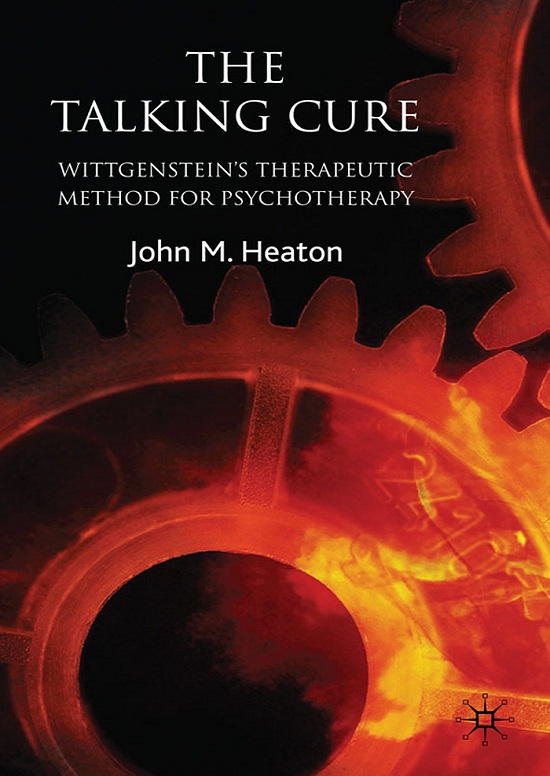
John Heaton is, amongst others, a practising psychiatrist and psychotherapist, a regular lecturer on the Advanced Diploma in Existential Psychotherapy programme at Regent’s College, London, and a long- and some-time editor of the Journal for Existential Analysis.
This is Heaton’s third book with Wittgenstein in its title. In it, he applies the great philosopher’s insights to the psychotherapeutic process in all its forms. Heaton’s principle thesis is that many of our deepest and most intractable problems find their roots in linguistic confusions and limitations, and are resolved not by the search for causes inherent in the various pseudo-scientific doctrines and theories of the mind (such as those of Freud and Klein), but by careful attention to the use of language. This is particularly true in neurosis and psychosis in which language is used not so much to clarify and to communicate as to deceive and to obfuscate.
Like all the best things, the talking cure has its roots in ancient Greece with such luminaries as Socrates and Diogenes the Cynic (see my post on Diogenes here). Upon being asked to name the most beautiful of all things, Diogenes replied ‘parrhesia’ (free speech, full expression), and his intransigently courageous and sometimes delightfully shocking behaviour consistently accorded with this, his, truth. The self-understanding that underlies parrhesia is revealed not in reductionist propositions based on questionable pictures of the mind, but in the singular use of language – both by the expression and by its truthfulness. In short, it is revealed not in causes, but in reasons, with all their multiplicities and particularities.
For Wittgenstein as for Heaton, the talking cure is, like philosophy itself, a battle against the bewitchment of intelligence by means of language, for it is not knowledge but understanding that is needed to live an integrated, productive, and, dare I say it, happy, life. To date, this important, indeed, devastating, critique has had little or no impact on psychotherapeutic practices, and Heaton’s revolutionary book requires and deserves to be read not only by psychotherapists and psychiatrists but by every mental health professional. Although the book is not difficult to leaf through, she with little more than a scientific background may find it difficult to understand, accept, or come to terms with certain concepts. As Lichtenberg tells us, ‘A book is like a mirror: if an ape looks into it an apostle is hardly likely to look out … he who understands the wise is wise already.’
Neel Burton
NB: This review has also been published in the September issue of the British Journal of Psychiatry.
The deepest truths often emerge where disciplines meet. About →




You must be logged in to post a comment.