The Manic Defence: Why You Can’t Bear to Stop

Sisyphus, by Titian
Sisyphus, by Titian.  Sisyphus is condemned to push his rock forever. Worse than that, he can never put it down.

By Dr Neel Burton — Psychiatrist, philosopher, and wine writer; Fellow of Green Templeton College, University of Oxford; author of over twenty books.

Essay substantially revised on 17 August 2026.

A horse galloped down the path at speed. It seemed as if the rider was on some urgent and vital mission. ‘Where are you heading?’ hollered a bystander. ‘I don’t know!’ came the already distant reply, ‘Ask the horse!’ —A Zen story

The manic defence is the tendency, when confronted with threatening thoughts and feelings, to distract the conscious mind with a flurry of activity or with the opposite thoughts and feelings.

A paradigm of the manic defence is the person who spends all their time rushing around from one task to the next, unable to tolerate even short stretches of inactivity. Other examples include the socialite who attends one event after another, the small and dependent boy who charges around declaiming that he is Superman, and the insecure teenager who laughs ‘like a maniac’ at the slightest intimation of sex. The behaviour or activity need not be frantic or compulsive. It might involve working, exercising, socialising, travelling, even helping others.

But that is all beside the point. What matters is what is being blocked out.

In Virginia Woolf’s Mrs Dalloway (1925), one of several ways in which Clarissa Dalloway prevents herself from thinking about her life is by planning needless events and then fussing over their every detail. In the 2002 film The Hours, which takes its inspiration from Woolf’s novel, the poet Richard Brown puts it rather more cruelly: ‘Oh, Mrs Dalloway… Always giving parties to cover the silence.’

The Essence of the Manic Defence

The essence of the manic defence is to prevent feelings of despair and helplessness from entering the conscious mind by occupying it with opposite feelings of euphoria, purposeful activity, and omnipotent control.

This might be why people feel driven not only to mark but also to celebrate such depressing milestones as entering the workforce (graduation), getting ever older (birthdays, anniversaries, New Year), and even, in more recent times, death and dying (Halloween). Our forefathers would be turning in their graves if they could see what had become of All Saints’ Day. 

It can be no coincidence that Christmas, originally a pagan solstice festival, is celebrated in the bleak mid-winter, in the shortest and darkest days of the year. A few years ago, I spent Christmas in New Zealand, where it is summer at that time of year—and the people there made much less of a fuss of it.

The manic defence may also take on more subtle or covert forms, such as creating a commotion over something trivial; filling every ‘spare moment’ with reading, study, or talking on the phone to a friend; spending several months preparing for some civic or sporting event; seeking out status or celebrity so as to be a ‘somebody’ rather than a ‘nobody’; entering into baseless relationships; and even, sometimes, getting married and having children. Of course, I don’t mean you.

When the Manic Defence Becomes a Problem

Everyone uses the manic defence, but some people use it to such an extent that they find it difficult to cope with even short periods of unstructured time such as holidays, weekends, and long-distance travel—which explains why airport shops are so profitable.

Since the advent of smartphones, it can be a struggle to go a few hours, or even the space of a toilet break, without checking our device. God forbid that we should be left alone, even for five minutes, with our own thoughts. The significance of the smartphone is that it has put the manic defence in your pocket, available anytime, anywhere.

Of course, keeping busy need not be unhealthy. It becomes so when we cannot bear to stop—when the activity serves not simply to live or exalt life, but to avoid being alone with ourselves.

The Norse gave the name Hel both to the goddess of death and to her cold, hidden kingdom. Hel is our hell, from an ancient root meaning ‘to conceal’. Unlike Valhalla, with its endless fighting and feasting, Hel is a realm of deprivation and stasis: the horror of nothing happening. Perhaps this is what we fear whenever we stop—not inactivity itself, but descent into the hidden place.

‘To do nothing at all,’ observed Oscar Wilde, long before the advent of the smartphone, ‘is the most difficult thing in the world, the most difficult and the most intellectual.’

People with a strong manic defence are unable to live in the moment, unable to be truly alive. They leave themselves no opportunity to integrate their thoughts or process their emotions, that is, no opportunity to gather perspective or come to terms with reality, that is, no opportunity to grow.

Because they never let it in, they lose all immunity to despair. And so when it finally hits them, it hits them like a tidal wave.

Continue Exploring

If this essay spoke to you, you might also enjoy Hide and Seek: The Psychology of Self-Deception.

You may also enjoy
The Last Imperialism and the Invisible Pandemic

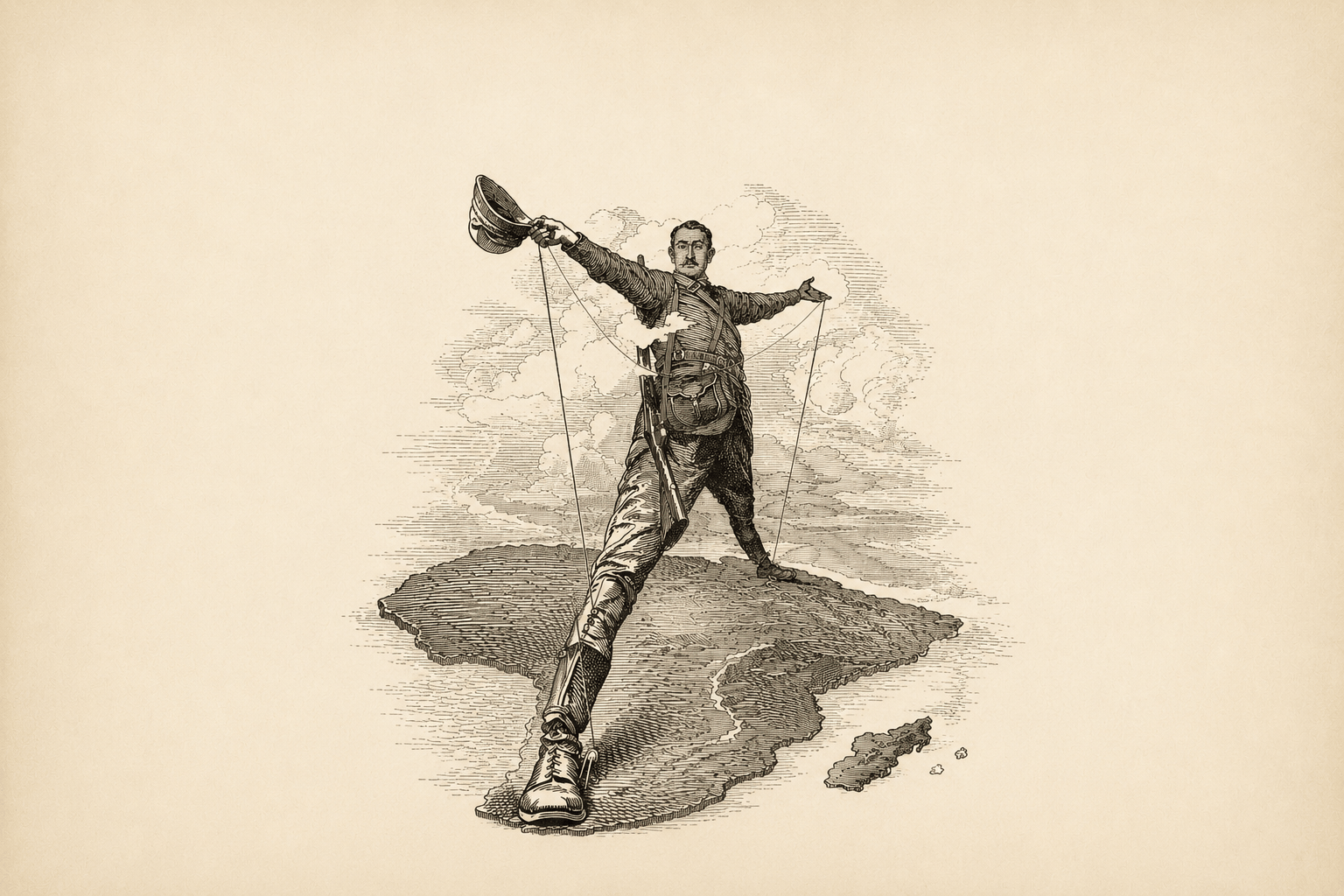
Cecil Rhodes straddling Africa
Cecil Rhodes straddling Africa. No commercial interests there.

By Dr Neel Burton — Psychiatrist, philosopher, and wine writer; Fellow of Green Templeton College, University of Oxford; author of over twenty books.

Essay substantially revised on 28 August 2026.

After the Indian Ocean tsunami of 2004, Western trauma specialists descended upon Sri Lanka expecting an epidemic of post-traumatic stress disorder (PTSD). They barely found any. The suffering, though very real, took other forms.

Until fairly recently, depression was mostly unknown to the lay population of Japan. But between 1999 and 2008, diagnoses of depression more than doubled as psychiatrists and pharmaceutical companies urged people to reinterpret their distress in terms of the disorder.

When I was growing up in Switzerland, virtually in the shadow of the World Health Organisation headquarters, I did not know anyone with ADHD, an eating disorder, or a problem with self-harm. Maybe my parents and teachers sheltered me from these things. But I watched a fair amount of television, and no one seemed to talk about them there either. So either I was living in the Truman Show, or they were much less prevalent.

Have these constructs always been there, waiting to be recognised? Then how come Aristotle, who studied everything and wrote a mountain of books, never described them? Or Hippocrates, for that matter. Or do the forms of our distress change with our interpretations of them?

Culture-Bound Syndromes and What They Reveal

Culture-bound syndromes are mental disturbances that only find expression in certain cultures or ethnic groups. There are a great many of them. For instance, dhat, seen in South Asian men, involves sudden fear about loss of semen in the urine, whitish discolouration of the urine, and sexual dysfunction, accompanied by feelings of weakness and exhaustion. Dhat may be rooted in the old Ayurvedic conception of semen as the most refined and precious of the bodily substances, reflected in the Eastern belief that it takes forty drops of blood to create a drop of bone marrow, and forty drops of bone marrow to create a drop of semen, and therefore that semen is a concentrated essence of life.

Culture-bound syndromes do not sit all too comfortably in Western classifications of mental disorder. DSM-IV simply defined them as ‘recurrent, locality-specific patterns of aberrant behavior and troubling experience…’ and listed a small number of paradigmatic forms such as dhat, koro, and susto.

DSM-5, published in 2013, replaces the notion of culture-bound syndromes with three ‘cultural concepts of distress’: cultural syndromes, cultural idioms of distress, and cultural explanations for distress. Rather than merely listing specific cultural syndromes, DSM-5 adopts a broader approach to cultural issues and acknowledges that all mental disorders, including DSM disorders, can be culturally shaped.

This is an important admission. The old concept of a culture-bound syndrome assumed that other people’s disorders were culturally shaped, whereas the West’s were an objective reflection of human biology. A man in Lahore who feared losing his vital essence in his semen was culture-bound; a man in London who understood his unhappiness as a chemical imbalance in his brain was science.

Science on Export

However, some DSM disorders are, it seems, much more culturally shaped than others. Thus, PTSD, ADHD, anorexia nervosa, bulimia nervosa, depression, and deliberate self-harm among others can all be understood as cultural syndromes—not natural kinds awaiting discovery, like Aristotle’s species, but shifting expressions of human distress. Yet, for being in the DSM, they are usually seen, and largely legitimised, as biological and therefore universal expressions of human suffering.

This matters because Western psychiatry does not stay in the West—which would be bad enough. Arm in arm with pharmaceutical companies, classifications such as DSM and ICD encourage the wholesale exportation not only of Western mental disorders, but also of Western accounts and approaches to mental disorder—and, ultimately, of Western values or tropes such as biologism, individualism, and the medicalisation of distress and deviance.

Japan, with which we began, offers a striking example. The anthropologist Junko Kitanaka has documented how depression went from being a relatively obscure condition to one of the most talked-about illnesses in recent Japanese history. The important question is not simply whether the Japanese became more depressed, but what happened when depression became available as a culturally sanctioned way of understanding distress.

Perhaps the suffering had always been there, but lacked the language—or permission—to express itself in the form of depression. But there is another possibility: that, by supplying a new language and template for distress, psychiatry did not merely reveal an existing epidemic but helped to shape one—and then sell the cure. Japan, coincidentally, happened to be rich.

A diagnosis, on this account, does not merely name something that already exists. Once established in a culture, it can influence which aspects of distress are noticed, how they are interpreted and expressed, and what is done about them. It becomes available not merely to psychiatrists but also to the people who suffer, who may be eager for an explanation of their suffering—and for a solution.

What It’s Costing Us

In Crazy Like Us: The Globalization of the American Psyche, the journalist Ethan Watters shows how psychiatric imperialism is leading to a pandemic of Western disease categories and treatments. Watters argues that changing a culture’s ideas about mental disorder actually changes that culture’s mental disorders, depleting the store of local beliefs and customs which, in many cases, provided better answers to people’s problems than antidepressants and antipsychotics. For Watters, ‘the most devastating consequence of the spread of American culture has not been our golden arches or bomb craters but our bulldozing of the human psyche itself.’

He writes:

Looking at ourselves through the eyes of those living in places where human tragedy is still embedded in complex religious and cultural narratives, we get a glimpse of our modern selves as a deeply insecure and fearful people. We are investing our great wealth in researching and treating this disorder because we have rather suddenly lost other belief systems that once gave meaning and context to our suffering.

To me, Watters seems to be describing a vicious cycle: biologism can take hold because the psyche has become impoverished, and biologism in turn further impoverishes it. The more we medicalise our suffering, the less meaning it can have; and the less meaning it has, the more we need to medicalise it. We’re receiving the signal, but attending to the sound rather than to the message.

Templates of Distress

Distressed people tend to externalise their suffering, partly to make it more manageable, and partly so that it can be recognised and legitimised. According to the medical historian Edward Shorter, our culture’s beliefs and narratives about illness provide us with a limited number of templates or models of illness by which to externalise our distress. If authorities such as psychiatrists and celebrities appear to endorse or condone a new template such as ADHD or deliberate self-harm, the template enters into our culture’s ‘symptom pool’ and the condition starts to spread. Meanwhile, tired templates seep out of the symptom pool, which may explain why conditions such as hysteria, fugue, and catatonic schizophrenia, which were once common, have become so rare.

The number of cases of bulimia nervosa rose in 1992, the year in which the journalist Andrew Morton exposed Princess Diana’s ‘secret disease’, and peaked in 1995 after Diana went public with her eating disorder. It began to decline in 1997, the year of her tragic death. This synchronology suggests that Diana’s iconic status combined with intense press coverage of her bulimia—and bulimia in general—led to an increase in the incidence of the disorder. Something similar happened in South Korea in 2010-12, when diagnoses of panic disorder shot up after several celebrities disclosed that they suffered from the condition.

Of course, Diana may simply have encouraged people who were already suffering from bulimia to recognise it and come forward. But Shorter’s more unsettling possibility is that, by making a particular template of distress culturally available, she also made it more likely that distressed people would stumble into it.

This does not mean that people consciously choose their symptoms, still less that they are pretending. Culture operates at a much deeper level than that. Just as we do not choose the language in which we dream—or even the contents of our dreams—so we do not choose the language in which we suffer.

And this brings us back to the central paradox of psychiatric imperialism. By exporting Western psychiatric templates, we may be creating the very universality that we claim merely to have discovered. And there are strong commercial drivers for doing so: universal disorders create universal markets. In exporting the diagnosis, we help to create the disease—or, on a global scale, an invisible pandemic.

The danger for us psychiatrists and health professionals when treating people with mental disorder is to treat the template without addressing or even acknowledging the very real distress that lies beneath—to hand out the tablets without asking what the suffering is about, and how it might actually be alleviated.

Continue Exploring

If this essay spoke to you, you might look into The Meaning of Madness.

You may also enjoy

Explore all Mental Health essays

This crayon drawing by a hospital in-patient with severe depression alludes to her temporary withdrawal from mainstream society. The months that she spent in hospital gave her the time and the solitude to think over her life, and the motivation to make difficult but necessary changes to it. She went on to make a full recovery.

Many a man curses the rain that falls upon his head, and knows not that it brings abundance to drive away the hunger. – St Basil the Great

Happiness is good for the body, but it is grief which develops the strengths of the mind. – Marcel Proust

Depression around the world

There are important geographical variations in the prevalence of depression, and these can in large part be accounted for by socio-cultural factors. In traditional societies, human distress is more likely to be seen as an indicator of the need to address important life problems, rather than as a mental disorder requiring professional treatment. For this reason, the diagnosis of depression is correspondingly less common. Some linguistic communities do not have a word or even a concept for ‘depression’, and many people from traditional societies with what may be construed as depression present with physical complaints such as headache or chest pain rather than with psychological complaints. Punjabi women who have recently immigrated to the UK and given birth find it baffling that a health visitor should pop round to ask them if they are depressed. Not only had they never considered the possibility that giving birth could be anything other than a joyous event, but they do not even have a word with which to translate the concept of ‘depression’ into Punjabi!

In modern societies such as the UK and the USA, people talk about depression more readily and more openly. As a result, they are more likely to interpret their distress in terms of depression, and less likely to fear being stigmatised if they seek out a diagnosis of the illness. At the same time, groups with vested interests such as pharmaceutical companies and mental health experts promote the notion of saccharine happiness as a natural, default state, and of human distress as a mental disorder. The concept of depression as a mental disorder may be useful for the more severe and intractable cases treated by hospital psychiatrists, but probably not for the majority of cases, which, for the most part, are mild and short-lived, and easily interpreted in terms of life circumstances, human nature, or the human condition.

Another (non-mutually exclusive) explanation for the important geographical variations in the prevalence of depression may lie in the nature of modern societies, which have become increasingly individualistic and divorced from traditional values. For many people living in our society, life can seem both suffocating and far removed, lonely even and especially amongst the multitudes, and not only meaningless but absurd. By encoding their distress in terms of mental disorder, our society may be subtly implying that the problem lies not with itself, but with them. However, thinking of the milder forms of depression in terms of an illness can be counterproductive, as it can prevent people from identifying and addressing the important life problems that are at the root of their distress.

Problems with diagnosis

All this is not to say that the concept of depression as a mental disorder is bogus, but only that the diagnosis of depression may have been over-extended to include far more than just depression the mental disorder. If, like the majority of medical conditions, depression could be defined and diagnosed according to its aetiology or pathology, such a state of affairs could not have arisen. Unfortunately, depression cannot as yet be defined according to its aetiology or pathology, but only according to its clinical manifestations and symptoms. For this reason, a doctor cannot base a diagnosis of depression on any objective criterion such as a blood test or a brain scan, but only on his subjective interpretation of the nature and severity of the patient’s symptoms. If some of these symptoms appear to tally with the diagnostic criteria for depression, then the doctor is able to justify making a diagnosis of depression.

One important problem here is that the definition of ‘depression’ is circular: the concept of depression is defined according to the symptoms of depression, which are in turn defined according to the concept of depression. Thus, it is impossible to be certain that the concept of depression maps onto any distinct disease entity, particularly since a diagnosis of depression can apply to anything from mild depression to depressive psychosis and depressive stupor, and overlap with several other categories of mental disorder including dysthymia, adjustment disorders, and anxiety disorders. Indeed, one of the consequences of the ‘menu of symptoms’ approach to diagnosing depression is that two people with absolutely no symptoms in common can both end up with the same diagnosis of depression. For this reason especially, the concept of depression has been charged with being little more than a socially constructed dustbin for all manner of human suffering.

An adaptive role?

Every person inherits a certain complement of genes that make her more or less vulnerable to developing depression during her lifetime. A person suffers from depression if the amount of stress that she comes under is greater than the amount of stress that she can tolerate, given her vulnerability to developing depression. Genes for potentially debilitating disorders such as depression usually pass out of a population over time because affected people have, on average, fewer children than non-affected people. The fact that this has not happened for depression suggests that the responsible genes are being maintained despite their potentially debilitating effects on a significant proportion of the population, and thus that they are lending an important adaptive or evolutionary advantage.

There are other instances of genes that both predispose to an illness and lend an important adaptive advantage. In sickle cell disease, for example, red blood cells assume a rigid sickle shape that restricts their passage through tiny blood vessels. This leads to a number of serious physical complications and, in traditional societies, to a radically shortened life expectancy. At the same time, carrying just one allele of the sickle cell gene (‘sickle cell trait’) makes it impossible for malarial parasites to reproduce inside red blood cells, and so confers immunity to malaria. The fact that the gene for sickle cell anaemia is particularly common in populations from malarial regions suggests that, in evolutionary terms, a debilitating illness in the few can be a price worth paying for an important adaptive advantage in the many.

What important adaptive advantage could depression have? Just as physical pain has evolved to signal injury and to prevent further injury, so depression may have evolved to remove us from distressing, damaging, or futile situations. The time and space and solitude that depression affords prevents us from making rash decisions, enables us to see the bigger picture, and – in the context of being a social animal – to reassess our social relationships, think about those who are significant to us, and relate to them more meaningfully and with greater understanding. Thus, depression may have evolved as a signal that something is seriously wrong and needs working through and changing or, at least, understanding. Sometimes people can become so immersed in the humdrum of their everyday lives that they no longer have the time to think and feel about themselves, and so lose sight of their bigger picture. The experience of depression can force them to stand back at a distance, re-evaluate and prioritise their needs, and formulate a modest but realistic plan for fulfilling them.

Sorrow’s children

Although the experience of depression can serve such a mundane purpose, it can also enable a person to develop a more refined perspective and deeper understanding of her life and of life in general. From an existential standpoint, the experience of depression obliges the person to become aware of her mortality and freedom, and challenges her to exercise the latter within the framework of the former. By meeting this difficult challenge, the person is able to break out of the mould that has been imposed upon her, discover who she truly is, and, in so doing, begin to give deep meaning to her life. Indeed, many of the most creative and most insightful people in society suffer or suffered from depression. They include the politicians Winston Churchill and Abraham Lincoln; the poets Charles Baudelaire, Hart Crane, Sylvia Plath, and Rainer Maria Rilke; the thinkers Michel Foucault, William James, John Stuart Mill, Isaac Newton, Friedrich Nietzsche, and Arthur Schopenhauer; and the writers Charles Dickens, William Faulkner, Graham Greene, Leo Tolstoy, Evelyn Waugh, Tennessee Williams, and many, many others.

The curse of the strong

People with depression are often stigmatised as ‘failures’ or ‘losers’. Of course, nothing could be further from the truth. If anything, the sorts of people who are most vulnerable to developing depression are all the opposite of failures or losers. If they are suffering from depression, it is most probably because they have tried too hard or taken on too much, so hard and so much that they have made themselves ill with depression. In other words, if they are suffering from depression, it is because their world was simply not good enough for them. They wanted more, they wanted better, and they wanted different, not just for themselves, but for all those around them. So if they are failures or losers, this is only because they set the bar far too high. They could have swept everything under the carpet and pretended, as many people do, that all is for the best in the best of possible worlds. However, unlike many people, they had the honesty and the strength to admit that something was amiss, that something was not quite right. So rather than being failures or losers, they are just the opposite: they are ambitious, truthful, and courageous. And that is precisely why they got ill. Getting ill is never a good thing, but in the case of depression it can present a precious opportunity to identify and to address some very challenging life problems, and to develop a deeper and more refined understanding and appreciation of one’s life and of life in general.

A note of caution

Depression should not be romanticised, sought out, or left unattended simply because it may or may not predispose to problem-solving, personal development, or creativity. The most severe forms of depression have a strong biological basis and are not related to a person’s life circumstances or aspirations. All forms of depression are drab and intensely painful, and most people who suffer from depression would never wish it on anyone, least of all themselves. In some cases, depression can lead to serious injury or even to death through accident, self-neglect, or self-harm. Even highly successful people who suffered from depression such as Hart Crane and Sylvia Plath ended up committing suicide in the end, and most people who attempt suicide do so because they are suffering with some form of depression.

On this day I’ve been diagnosed with depression.
It’s a biochemical illness of the brain,
Or so I’m told by the medical profession.

Research proves it’s a serotonin depletion,
And just as physical as chest pain or chilblain.
On this day I’ve been diagnosed with depression.

It has somehow become a common condition,
But popping a pill can make us normal again.
Or so I’m told by the medical profession.

Doctor, please, I think that I may have a question,
I’m afraid that you may find it rather profane.
‘I am a proficient, experienced clinician,
But there is only so much that I can explain.’

On this day I’ve been diagnosed with depression,
Or so I’m told by the medical profession.

– NB