The Psychology and Philosophy of Ambition

Our highest achievement may not be what we accomplish, but who we become along the way.

By Dr Neel Burton — Psychiatrist, philosopher, and wine writer; Fellow of Green Templeton College, University of Oxford; author of over twenty books.

Essay revised on 22 July 2026.

‘Ambition’ derives from the Latin ambitio, ‘a going around (to solicit votes)’, and, by extension, ‘a striving for honour, recognition, and preferment’. The word originated in the Roman practice of canvassing for political office by going around among citizens and voters.

Ambition might be defined as a striving for some kind of achievement or distinction, and involves, first, the desire for such, and, second, the willingness to work towards it even in the face of adversity or failure. To be ambitious is to achieve first and foremost not for the sake of achievement itself (which is to be high-reaching) but for the sake of distinguishing oneself from others. Were we the last person on earth, it would make little or no sense to be ambitious.

Ambition is often confused with aspiration. But unlike mere aspiration, which has a particular goal for object, ambition is a trait or disposition, and, as such, is persistent and pervasive. Having achieved one goal, the truly ambitious person soon formulates another at which to keep on striving.

Ambition is often spoken of in the same breath as hope, as in ‘hopes and ambitions’. If hope is the desire for something to happen combined with an anticipation of it happening, ambition is the desire for achievement combined with the willingness to work towards it. The opposite of hope is fear, hopelessness, or despair; the opposite of ambition is ‘lack of ambition’, which is not in itself a negative state.

The Ancient Debate

Perhaps it is even the preferable state. In the East, ambition is seen as a vice or evil that, by miring us in worldly pursuits, holds us back from the spiritual life and its fruits of virtue, wisdom, and tranquillity. In the West, in contrast, ambition is lauded as a precondition of success, even though the Western canon broadly falls against it.

For instance, in the Republic, Plato says that, because they are devoid of ambition, good people shun politics, leaving us to be ruled by bad people and their petty ambitions. Even if invited, good people would refuse to rule, preferring instead to hide away in their studies and gardens. To force them out, Plato goes so far as to advocate a penalty for refusing to rule—perhaps something for us to consider in this day and age, if there are still any good people left.

Aristotle had a more nuanced take on ambition. In his Ethics, he defines virtue as a disposition to aim at the intermediate between excess and deficiency, which, unlike either extreme, is a form of success and therefore worthy of praise. Thus, in the sphere of ‘fear and confidence’, those who run headlong into every danger are rash, while those who flee from every danger are cowards, whereas courage lies in the intermediate or mean—the famous ‘golden mean’. Similarly, in the sphere of ‘minor honour and dishonour’, Aristotle names ‘ambition’ as the vicious excess, ‘lack of ambition’ as the vicious deficiency, and ‘proper ambition’ as the mean.

Aristotle’s virtues and vices. In case you’re wondering, the sphere of ‘major honour and dishonour’ concerns not ambition but pride.

To this day, we speak of ambition after Aristotle, as ‘healthy ambition’, ‘unhealthy ambition’, and ‘lack of ambition’. Healthy ambition can be understood as the measured striving for achievement or distinction, and unhealthy ambition as the disordered striving for such. While healthy ambition is constructive and enabling, unhealthy ambition is destructive and inhibiting, and, thus, more akin to greed.

The Psychology of Ambition

The highly ambitious are sensitive to failure, and experience almost constant dissatisfaction or frustration. As with Sisyphus, their task is never accomplished; and, as with Tantalus, their prize is always out of reach. Just as Tantalus had a rock dangling over his head, so the ambitious have the noose of failure hanging about their neck.

The fear of failure checks the ambition of all but the most courageous—or rash—of people. For just as mania can lead into depression, so ambition can lead into anguish and despair. To live with ambition is to live with fear and anxiety, unless, that is, the weight of our ambition can be alleviated by gratitude, which is the feeling of appreciation for all that we already have. Although gratitude is especially lacking in future-focused people, ambition is much less toxic if, even without it, life can still seem worth living.

We are not ambitious unless we are willing to make sacrifices—even though the end of our ambition may not be worth them, and not just because it may never be attained or approached. It could even be argued that, with pure, naked ambition, the end is never worth the sacrifice. Fortunately, ambition is rarely pure but usually admixed with unselfish aims and motives, even if these may be more incidental than deliberate and determining; and it may be that our greatest achievements—indeed, man’s greatest achievements—are all, or almost all, accidents of ambition. Simply put, society will not support our ambitions unless they are prosocial.

In that much, ambition is like the carrot that goads the donkey that pulls the cart. Studies have found that, on average, the ambitious attain higher levels of education and income, build more prestigious careers, and, despite the nocuous effects of their ambition, report higher levels of overall life satisfaction. Owing to bad luck and poor judgement, most ambitious people sooner or later fall short of their ambitions, but that still lands them far ahead of their less ambitious peers.

The Origins of Ambition

Why are some people more ambitious than others? To cut a long story short, ambition is a complex construct born out of a host of factors, including parental role models and expectations, birth order and sibling rivalries, fear of failure and rejection, feelings of inferiority or superiority, intelligence or lack thereof, past achievements, competitiveness, envy, anger, revenge, and the instinctual drives for life and sex.

From a psychoanalytic perspective, ambition can be understood as an ego defence, serving, like all ego defences, to enforce and uphold a certain idea of the self. Rather than ambition, which is a sophisticated defence, those who lack what it takes to put themselves out there are more likely to respond with less mature defences—for instance, by rationalizing that ‘life is unfair’ or that they are ‘less of a leader and more of a team-player’. If their ego is much bigger than their courage, they may become dismissive or even destructive, the latter also being a means of drawing attention or sabotaging themselves to provide a ready excuse for their lack of success: ‘It’s not that I failed, it’s that…’

A defence that merits particular attention in the context of ambition is sublimation, which is among the most mature and successful of all ego defences. If a person feels angry with his boss, he may go home and kick the dog—or he might instead go out for a long run. The first instance (kicking the dog) is an example of displacement, the redirection of uncomfortable feelings towards someone or something less important, which is an immature and destructive ego defence. The second instance (going out for a long run) is an example of sublimation, the channelling of uncomfortable feelings into positive or productive activities.

If someone discovers that she’s been cheated on, she might fly into a rage and cut up all her partner’s clothes—or she might instead write a poem to explore and express how she feels. And if the poem, or the poet, were one day to be remembered, would that not be the sweetest revenge of all?

A third example of sublimation, more pertinent to ambition, is the person with sadistic or homicidal urges who joins the military to provide an outlet for those urges—or who, like Justice Wargrave in Agatha Christie’s And Then There Were None, becomes a hanging judge who doles out the death penalty to murderers. In the novel’s postscript, a fishing trawler dredges up a bottle just off the Devon coast. The bottle contains the confession of the late Wargrave, in which he reveals a lifelong sadistic temperament coupled with a fierce sense of justice. Though he had longed to torture, terrify, and kill, he could not bring himself to harm innocent people. So instead, he became a hanging judge and thrilled at the sight of convicted (and guilty) criminals trembling with fear.

Beyond Ambition

In life, few things are either good or bad. Rather, their good and bad depend on what we are able to make out of them. People with a high degree of healthy ambition are those with the insight and strength (strength that is often born out of insight) to control the blind forces of ambition, that is, to shape their ambition so that it matches their interests and ideals, and to harness it so that it fires them without also burning them or those around them.

The purpose of work is not to further our own interests, even if it is only a house in the middle of the woods that we seek, but to help others and move humanity forward—which is, in any case, the best way of furthering ourselves. The highest wisdom, born out of humility, is perhaps that it is not necessary to be ambitious to be high-reaching, or to feel alive. Indeed, it is often our conventional ambitions that are holding us down—even, that are killing us.

People shrink or expand into the degree and nature of their ambitions. Ambition needs to be cultivated and refined, and yet has no teachers.

Continue Exploring

If you enjoyed this article, you might also enjoy The Art of Failure, an unconventional exploration of success, ambition, happiness, and the good life.

You may also enjoy

Is There a Right Amount of Anger?

Golden musical notes, a beautiful harmony
Virtue, like music, depends not on the right amount, but on the right measure.

By Dr Neel Burton — Psychiatrist, philosopher, and wine writer; Fellow of Green Templeton College, University of Oxford; author of over twenty books.

This article is a faithful exposition of Aristotle’s account of virtue in Book II of the Nicomachean Ethics.

Aristotle’s account of moral virtue rests on a simple but demanding idea: that goodness is not something we possess by nature, but something we acquire through practice.

In Book 2 of the Nicomachean Ethics (c. 330 BCE), Aristotle argues that moral virtues are formed through repetition. Unlike sight and hearing, which are given to us at birth, virtue is not in our nature. But neither is it contrary to our nature, which is adapted to receive it. Just as a sculptor becomes a sculptor by sculpting, so the virtuous become virtuous by exercising virtue.

One cannot define virtue with any precision because the goodness of a feeling or action is highly person- and context-dependent. All that can be said is that virtue, like strength, is undermined by a lack or excess of training. For instance, he who flees from everything becomes a coward, while he who runs headlong into every danger becomes rash. Courage, in contrast, is indicated and produced by the mean.

Moral excellence is intimately related to pleasure and pain. For it is in the pursuit of pleasure and avoidance of pain that bad deeds are committed, and good deeds omitted. Hence, it is by pleasure and pain that bad people are bad.

There are three objects of choice, the noble, the advantageous, and the pleasant, and three objects of avoidance which are their contraries, the base, the injurious, and the painful. The good tend to go right about these, whereas the bad tend to go wrong. This is especially true of pleasure, which is common to the animals, and also contained in the advantageous and the noble. The good feel pleasure from the most beautiful, noble [kalos] actions, but the bad or not-good are often confused about what is most pleasant. It is harder to fight with pleasure than with anger, but virtue, like art, is concerned with what is harder, and the good is better when it is harder.

A person may perform an apparently virtuous action by chance or under duress. An action is only virtuous if it is recognised as being virtuous and performed for that sake by a person with a set, unvarying character. In sum, an action is only virtuous if it is such as a virtuous person would perform.

The Golden Mean

Three things are found in the soul: passions, faculties, and dispositions [hexeis]. As the virtues are neither feelings nor faculties, they must be dispositions: dispositions to aim at the intermediate, or mean, between deficiency and excess.

The principal virtues, together with their corresponding vices, are listed in the table below.

Aristotle's table of the virtues, with the golden mean, the excess, and the deficiency
Copyright Neel Burton

In any sphere, arriving at the mean is a form of success and worthy of praise. While it is possible to fail in many ways, it is possible to succeed in one way only, which is why the one is easy and the other is difficult. By the same token, men may be bad in many ways, but good in one way only.

So far so good, except that not every passion or action admits of a mean: for instance, not envy or murder. It is never a question of murdering the right person, at the right time, in the right way, for murder is neither a deficiency nor an excess, but always and intrinsically vicious.

In some cases, one vice can be closer to the virtue than the contrary vice, for instance, rashness is closer to courage than cowardice, and prodigality is closer to liberality than meanness. This is partly because the contrary vice, whether cowardice or meanness, is more common. Hence, people oppose not rashness but cowardice to courage, and not prodigality but meanness to liberality.

It is no easy task to be good. To increase the likelihood of hitting the mark, we should (1) avoid the vice that is furthest from the virtue or mean; (2) consider our vices and drag ourselves towards their contrary extremes; and (3) be wary of pleasure and pain.

For in everything it is no easy task to find the middle… anyone can get angry—that is easy—or give or spend money; but to do this to the right person, to the right extent, at the right time, with the right motive, and in the right way, that is not for everyone, nor is it easy; wherefore goodness is both rare and laudable and noble.

The Golden Mean (Virtue Ethics) vs the Categorical Imperative vs Utilitarianism

Aristotle’s ethics differs fundamentally from the two great ethical systems that came after him. Utilitarianism asks, ‘Which action will produce the most happiness?’ Kantian ethics asks, ‘Which action accords with strict moral duty?’ Aristotle begins somewhere else entirely: ‘What kind of person should I be?’ For him, ethics is not primarily about calculating consequences or obeying rules, but about cultivating character. The virtuous person develops, through practice and experience, the subtle judgement to feel and act in the right way, to the right degree, at the right time, and for the right reasons. Instead of giving us a crude formula for making moral decisions, Aristotle asks us to become the sort of person who can make them intuitively.

Sometimes, we may somewhat miss the mark, for instance, get angry too soon or not enough, yet still be praiseworthy. It is only when we deviate more markedly from the mean that we become blameworthy.

We help others by being virtuous, but we also help ourselves, for virtue is a disposition to happiness, and happiness is the exercise of virtue.

Continue Exploring

If this article spoke to you, you might look into The Gang of Three: Socrates, Plato, Aristotle.

You may also enjoy

What the Stoic Seneca Knew About Ambition, Success, and Happiness

Kind Midas turning a rose into gold
King Midas turning a rose to gold.

By Dr Neel Burton — Psychiatrist, philosopher, and wine writer; Fellow of Green Templeton College, University of Oxford; author of over twenty books.

Essay substantially revised on 19 August 2026.

When Dionysus, god of wine, was in Phrygia, his teacher Silenus wandered off drunk and was carried to King Midas. When Dionysus came to collect Silenus, he offered Midas any wish. Midas asked for the power to turn whatever he touched into gold. Before dinner, he had turned every bush in his famed rose garden to gold. But he was horrified when his food and wine also turned to gold. His daughter tried to comfort him, but she too suffered the same fate. When Midas begged to be rescued, Dionysus told him to bathe in the River Pactolus, the golden sands of which later became the source of Croesus’ fabulous wealth.

By confusing means and ends, Midas had made one of today’s commonest mistakes.

The Stoic philosopher Seneca was one of the richest men in the Roman Empire. Having risen from provincial origins to become tutor and chief adviser to the emperor Nero, he spent much of his life thinking about Midas’ mistake—and his own.

In his famous letters, this is what he tells his friend Lucilius.

The Dangers of Ambition

To be ambitious is to seek out achievement not for the sake of achievement itself, which is to be high-reaching, but for the sake of distinguishing ourselves from others. Were we the last person on earth, it would make little sense to be ambitious. ‘Ambition, luxury, and caprice need a stage; you will cure them if you keep them from being viewed.’

The dangers of ambition are threefold. First, like Midas, we should be wary of what we wish for. ‘In ordinary speech, we often say that we are overjoyed that one person was elected consul, or that another was married or his wife has given birth, events which, far from being causes of joy, are frequently the beginnings of future sorrow.’ In general, the less we have, the freer, and richer, we are.

Second, ambition is future-focused; to live with ambition is to live in fear and anxiety while discounting the moment that is before us. Because ambition ties us to externals (things that are beyond our control), and, ultimately, to other people, it leaves us subject, and vulnerable, to them. ‘Liberty does not come for free. If you value it highly, you must devalue everything else.’

Third, ambition is often destructive. Great leaders like Caesar, Pompey, and Marius who are driven by ambition are not even in control of themselves, and, as a result, end up doing terrible things: Marius led armies, but ambition led Marius. While these men were whirling down on the entire world, they themselves were in a whirl, just like tornadoes, which spin everything around because they themselves are spinning. No one becomes fortunate at the expense of another’s misfortune.

On Fame and Fortune

The purpose of work is not to further our own interests, even if it is only a house in the middle of the woods that we seek, but to help others and move humanity forward—which is, in any case, the best way of furthering ourselves. The highest wisdom is perhaps that it is not necessary to be ambitious to be high-reaching, or to feel alive. Indeed, it is often our conventional ambitions that are holding us down—even, that are ageing and killing us.

If it is fame that we seek, we will have to adopt the misguided values of the majority. ‘It is by skill in wrongdoing that one cultivates popular acclaim. You must make yourself like them: they will not approve of you unless they recognise you.’

Although we would be foolish to seek out fame, we might nonetheless fall into it by way of our good works, in which case we should utilise it for the greater good.

If it is merely wealth that we seek, we would do well to remember that wealth is not the answer to our problems, since there are many wealthy people who nonetheless feel wretched, and sometimes all the more wretched for being wealthy. Had Cicero had only one house, instead of twenty properties, he would, when exiled, have lost only the one house. And with fewer administrative worries, and less travelling between houses, he might have written more books.

We suppose that wealth increases our pleasures, but the greatest pleasures are in any case simple and easy to obtain if only our mind is open to them: eating, sleeping, bathing, seeing a friend, walking in a beautiful garden. If anything, wealth removes us from our pleasures by habituating us to luxury and shifting our focus onto itself. ‘He enjoys riches most who has least need of riches. While he is thinking about its increase, he is forgetting about its use.’ Midas could possess a golden rose, but he could no longer smell a rose.

On Proper Ends

Even allowing that wealth does increase our pleasures, pleasure is not the be-all and end-all, but, like wealth, distracts from our higher purpose, which is the work of the mind. ‘Maecenas would have provided a fine example of Roman rhetoric, had he not been weakened, even castrated, by his great wealth.’

Just as a horse ought to be judged on its speed rather than its harness, so a man ought to be judged on his mind rather than his property, because it is reason, and not wealth, that is the measure of a man.

Many people have wealth in the same way that people are said to have a fever when it is in fact the fever that has hold of us. If our mind is diseased, what does it matter whether our sickbed is made of wood or gold?

Stoics, by virtue of their virtue, are predisposed to wealth, and, even without seeking it—especially without seeking it—may end up being very wealthy. There is no harm in being wealthy and occasionally enjoying wealth, so long as our money smells good and we are not tied to it.

The real value of money is to buy time for the mind; the real value of fame is to disseminate its fruits. Fame and fortune should never be our masters, but only ever our slaves.

Continue Exploring

If this essay spoke to you, you might look into Stoic Stories, an overview of Stoicism through its best stories.

You may also enjoy

Life in Epicurus' garden
Life in Epicurus’ garden

By Dr Neel Burton — Psychiatrist, philosopher, and wine writer; Fellow of Green Templeton College, University of Oxford; author of over twenty books.

Essay lightly revised on 21 August 2026.

Why do we garden? We spend extraordinary amounts of time and effort digging, planting, pruning, watering, and weeding, only to have to do it all over again. Yet gardens have been with us since the beginnings of civilisation, serving not merely as sources of food but as expressions of power, religion, philosophy, and our relationship with nature.

Ineni, architect to Pharaoh Thutmose I (d. 1492 BCE), had his garden painted into his tomb, along with a list of all the trees within it—presumably, so that they might be accounted for in the afterlife.

Ineni’s garden included:

  • 170 date palms
  • 120 doum palms
  • 73 sycamore figs
  • 31 persea
  • 16 carob
  • 12 grapevines
  • 10 tamarisks
  • 8 willows
  • 5 figs
  • 5 pomegranates
  • 5 garland thorns
  • 2 moringas
  • 2 myrtles…

A grand garden of this sort symbolised control and mastery over nature, a haven of peace and plenty, of order and beauty, by which to project the status, power, and temperament of its owner. Other, more famous, examples include the Hanging Gardens of Babylon, the Gardens of the Real Alcázar in Seville, and the Gardens of Versailles.

The garden could also have a religious or philosophical message or dimension. For example, the Old Testament’s four rivers of Eden are represented by four watercourses in Islamic paradise gardens, and four paths in Christian cloister gardens. The Zen garden, by hinting at hidden principles, serves as an aid to meditation about the true meaning of existence.

The Gardens at Versailles reflect a rationalist, Cartesian vision of God-given ideas and principles for the intellect to apprehend, whereas English landscape gardens are more in the empiricist mould, presenting nature as a stream of sensory experiences skirting across the blank slate of the mind.

In either case, the garden represents a taming of nature, from dark and deadly forest, or disease-infested swamp, to an extension of our living space: open and structured to still our minds, but retaining enough mystery to sustain our interest and even, perhaps, capture our imagination.

Trees as Symbols

Individual plants too can have a meaning. English churchyards often feature yew trees, which are poisonous, dark, and evergreen, and symbolise both death and immortality. A yew tree is commonly found near the lychgate, where, prior to the advent of mortuaries, the dead awaited burial while mourners kept vigil.

In the ancient world, the palm tree symbolised victory, peace, and bounty, while the cedar of Lebanon symbolised pride, majesty, and dignity. Both also stood for righteousness, as in Psalm 92:12: ‘the righteous shall flourish like the palm tree, grow tall like the cedar of Lebanon.’ Today, Cedrus libani is the national emblem of Lebanon, and a symbol of the peaceful Cedar Revolution of 2005.

Trees can also be planted to mark an important occasion, which is why British royals are often asked to brandish a shovel. In an annual tradition, the Friends of my local park purchase a noteworthy tree and invite a dignitary such as the Lord Mayor to plant it.

A New Religion?

Today, gardens and gardening are more popular than ever. Millions of people in the UK garden, whether in a garden, on an allotment, or simply on a balcony.

The BBC’s flagship Gardeners’ World, presented by Monty Don, attracts millions of viewers—which, in the UK, is many more people than go to church.

Community garden projects and ‘guerrilla gardening’ are on the rise, as are garden towns and villages. A few years ago, one of my neighbours organised for thousands of daffodils to be planted on a neglected and overlooked common, transforming it into a Wordsworthian idyll for the selfie generation. I wonder, do they know that ‘daffodil’ is Narcissus in Latin?

Screenshot of Monty Don sharing this article on Twitter
Monty Don sharing this article on Twitter. Narcisse, moi?

Good for Mind and Body

Gardening is more and more recognised, and even prescribed, for its health benefits. These include increased muscle strength and cardiovascular fitness; improved sleep and diet (if you grow your own produce); reduced stress, anxiety, and depression; a greater sense of community and belonging; and better self-esteem.

You don’t even have to get your hands dirty: some of these benefits accrue simply from visiting a garden, or even just looking over one—although it probably helps to notice and mentally engage with the greenery.

Researchers in Korea randomly assigned hospital patients recovering from thyroidectomy to rooms with plants and flowers, and rooms without, and found that the test group fared significantly better, asking for less pain relief and requiring less time in hospital. So yes, it makes sense to bring flowers, and, at home, to have indoor plants.

Even street trees greatly benefit our health. An American study looking at the city of Toronto found that, for cardio-metabolic conditions (heart disease, stroke, diabetes, obesity…), an increase of just 11 trees per city block had a comparable effect to an increase in annual personal income of USD 20,000.

How might gardening help with mental health? To various degrees, we live inside the stories we tell ourselves. But gardening drags us out of our tortured heads and back into the natural world, which blunts the ideological and emotional extremes to which detached, abstract thought is prone.

In 1920, a mentally strained Ludwig Wittgenstein took up the post of assistant gardener at Klosterneuburg Abbey, explaining in a letter to a friend that he had been longing for ‘some kind of regularized work which, of all the things I can do in my present condition, is the most nearly bearable…’

Voltaire’s Candide (1759) is an attack on the highly abstracted, convoluted, and strained philosophy of Gottfried Leibniz (whom I nevertheless love), and famously concludes with the phrase ‘we must cultivate our garden.’

The Gardening of the Soul

In the Philosophy of Existence (1938), Karl Jaspers describes this disinterested process of looking outside oneself—or phenomenology, as it is sometimes called—as ‘a thinking that, in knowing, reminds me, awakens me, brings me to myself, transforms me.’

Just picture the gardener’s pure and simple delight at the first crocuses or tulips, a bird’s nest, a swarm of bees…

If gardening makes us feel better, it also makes us into better people. It is a moral education, a school of life, instilling virtues such as pragmatism, patience, perseverance, reliability, and humility, which then transfer out into other spheres.

In his treatise on agriculture (c. 160 BCE), Cato is quite clear that farmers make the bravest and strongest soldiers, and that, of all men, they are ‘the most highly respected, most stable, and least hated (minime invidiosus).’

In Plato’s Phaedrus (c. 370 BCE), Socrates compares the wise man to the good husbandman, who is careful to scatter the right seed in the right soil in the right season. Similarly, the good teacher is careful to sow the right words in the right soul at the right time. For Plato, the Divine Teacher, teaching is the gardening of the soul.

Building on these notions, Epicurus (d. 270 BCE) founded his philosophical school in a garden just outside Athens. The Garden sought to return to an agricultural golden age of harmony, community, and self-sufficiency—to ground a flourishing life in the midst of a flourishing garden.

Life in the Garden was not as you might imagine. Epicurus was content with bread and water and famously asked a friend to send him a little cheese so that, when he wished, he might feast. Far more important than luxury was friendship. ‘Of all the things which wisdom provides for the happiness of the whole life,’ he wrote, ‘by far the most important is friendship.’ 

Time Made Visible

A garden is a microcosm of the outside world. Gardeners are acutely aware of the rhythms and cycles of nature: which flowers are in their prime, when to plant out the seedlings, when and how and how much it last rained. Just as music is time made audible, so the garden is ‘time made visible’ (Clive James).

Winter is difficult, yes because it is dark and cold, but also because time is no longer structured by a succession of flowerings and fruitings. Time becomes amorphous, to be entertained and endured rather than savoured and celebrated like the season of magnolias, cherry blossom, rhubarb, plums, or chestnuts.

More than just keen observers of time, gardeners are real-life Time Lords, able to speed up time by working in the garden, and, later, to slow it right down by sitting back and surveying the fruits and flowers of their labour. Some gardeners are even able to step out of time altogether, working year-round to create Arcadian moments of perfection.

But moments are all they will ever be. When you paint a picture or write a book, it is there for ever (and isn’t that just amazing?), but when you mow the lawn you have to do it all over again in just a few days’ time. The gardener is like Sisyphus, the mythological king made to repeat for all eternity the same meaningless task of pushing a boulder up a mountain, only to see it roll back down again.

In his essay of 1942, The Myth of Sisyphus, Albert Camus concludes: ‘The struggle to the top is itself enough to fill a man’s heart. One must imagine Sisyphus happy.’

Even in a state of utter hopelessness, Sisyphus can still be happy. Indeed, he is happy precisely because he is in a state of utter hopelessness, because in recognising and accepting the hopelessness of his condition, he at the same time transcends it.

Continue Exploring

You may also enjoy

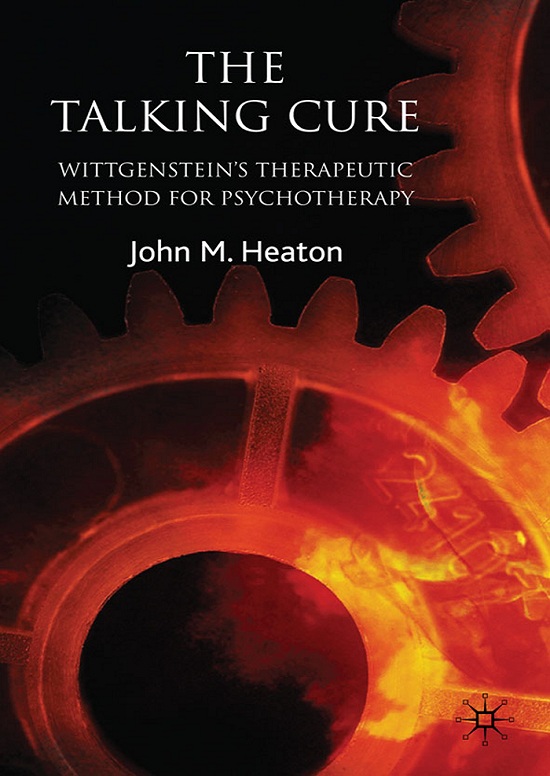
John Heaton is, amongst others, a practising psychiatrist and psychotherapist, a regular lecturer on the Advanced Diploma in Existential Psychotherapy programme at Regent’s College, London, and a long- and some-time editor of the Journal for Existential Analysis.

This is Heaton’s third book with Wittgenstein in its title. In it, he applies the great philosopher’s insights to the psychotherapeutic process in all its forms. Heaton’s principle thesis is that many of our deepest and most intractable problems find their roots in linguistic confusions and limitations, and are resolved not by the search for causes inherent in the various pseudo-scientific doctrines and theories of the mind (such as those of Freud and Klein), but by careful attention to the use of language. This is particularly true in neurosis and psychosis in which language is used not so much to clarify and to communicate as to deceive and to obfuscate.

Like all the best things, the talking cure has its roots in ancient Greece with such luminaries as Socrates and Diogenes the Cynic (see my post on Diogenes here). Upon being asked to name the most beautiful of all things, Diogenes replied ‘parrhesia’ (free speech, full expression), and his intransigently courageous and sometimes delightfully shocking behaviour consistently accorded with this, his, truth. The self-understanding that underlies parrhesia is revealed not in reductionist propositions based on questionable pictures of the mind, but in the singular use of language – both by the expression and by its truthfulness. In short, it is revealed not in causes, but in reasons, with all their multiplicities and particularities.

For Wittgenstein as for Heaton, the talking cure is, like philosophy itself, a battle against the bewitchment of intelligence by means of language, for it is not knowledge but understanding that is needed to live an integrated, productive, and, dare I say it, happy, life. To date, this important, indeed, devastating, critique has had little or no impact on psychotherapeutic practices, and Heaton’s revolutionary book requires and deserves to be read not only by psychotherapists and psychiatrists but by every mental health professional. Although the book is not difficult to leaf through, she with little more than a scientific background may find it difficult to understand, accept, or come to terms with certain concepts. As Lichtenberg tells us, ‘A book is like a mirror: if an ape looks into it an apostle is hardly likely to look out … he who understands the wise is wise already.’

Neel Burton

NB: This review has also been published in the September issue of the British Journal of Psychiatry.